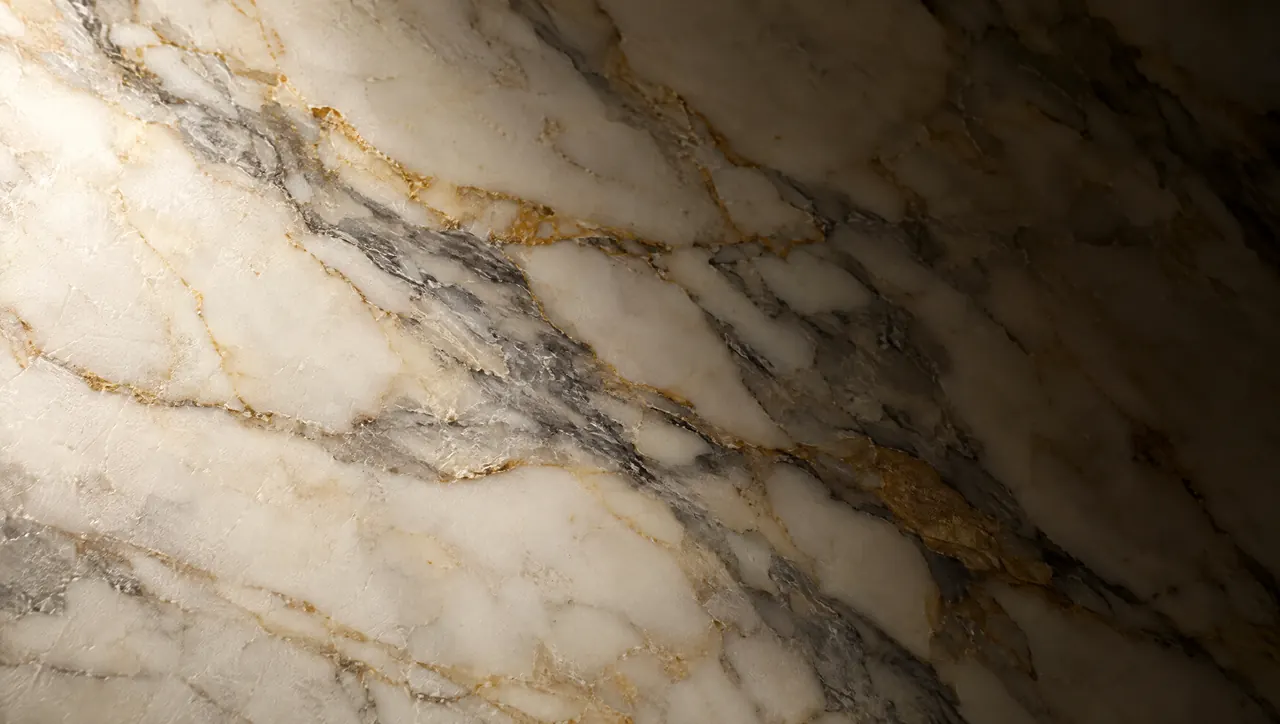
Good baking station kitchen design comes down to five decisions: the surface you work dough on, how high it sits, where the ovens go, what you keep within reach and where the power runs. Settle them early and the rest of the kitchen can be planned around a zone that actually works.
Mid-October is when the oven stops being occasional. On the Front Range, anyone who bakes seriously has also learned that altitude changes the rules: water boils at a lower temperature, doughs rise faster and moisture leaves quickly in thin, dry air. Colorado State University Extension publishes high-altitude adjustments for recipes. A kitchen cannot change air pressure, but it can make every step around those adjustments easier.
Baking station kitchen design starts with location
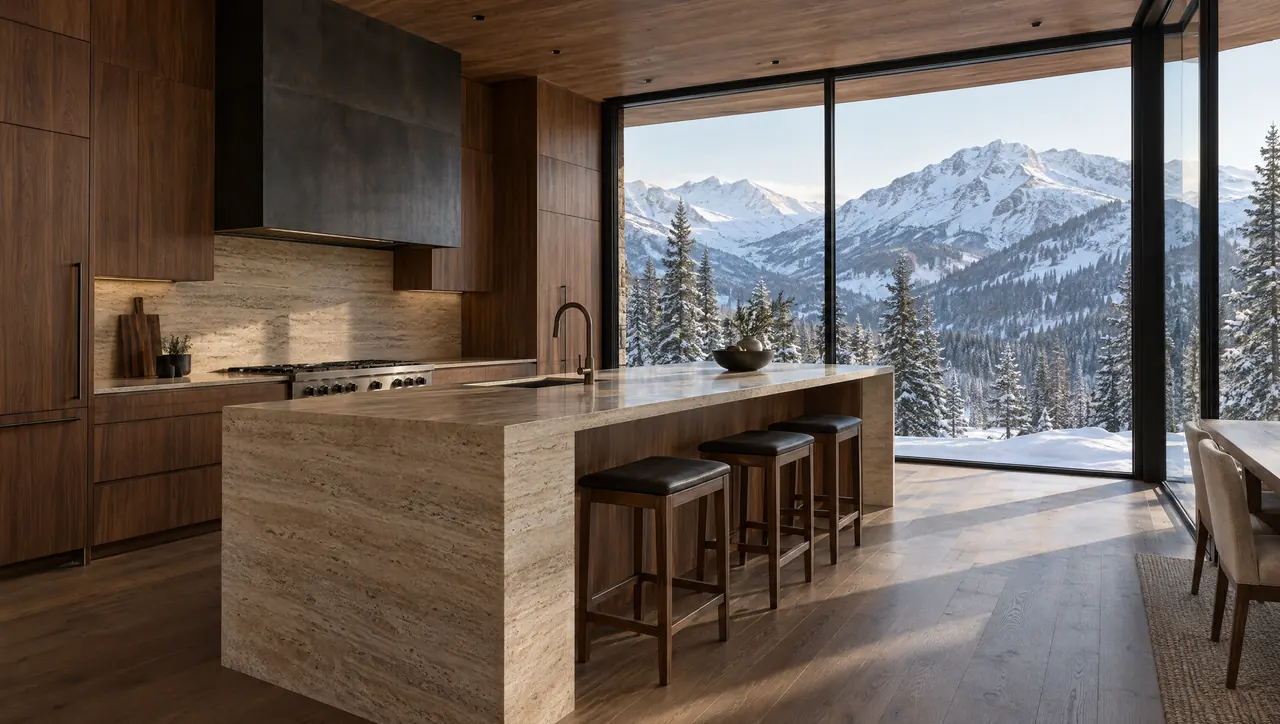
Put the station on a stretch of counter that sits outside the main path between refrigerator, sink and cooktop, and close to the ovens. Baking is slow, floury work that spreads out. It needs a run where nobody reaches past you for a glass of water. The end of an island or a perimeter run beside a wall of tall cabinetry usually suits it. If the kitchen is still at the layout stage, our piece on designing a kitchen around architecture covers how circulation shapes these choices.
The work surface
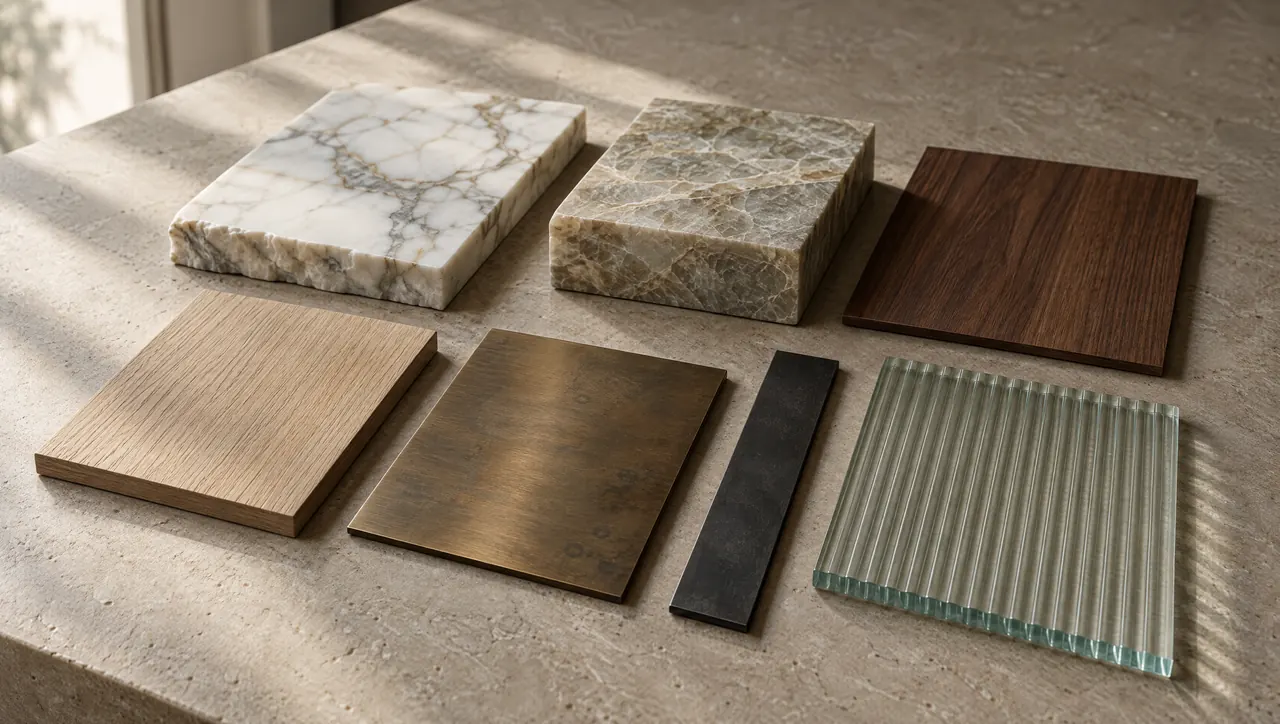
The surface decides how pleasant the work is. Each material behaves differently under dough, butter and heat.
| Surface | Good for | Watch for |
|---|---|---|
| Marble | Pastry, laminated doughs, tempering chocolate; stays cool and smooth | Etches with acids like lemon and vinegar; needs sealing against butter and oil stains |
| Granite and other hard stone | Heavy daily use, hot pans set down briefly | Patterned stone can hide flour you meant to clean |
| Wood (edge or end grain) | Kneading bread; warm, forgiving, quiet | Needs regular oiling; keep it away from the sink |
| Engineered quartz | Low upkeep, nonporous, consistent color | Can be damaged by hot pans; not the place to land a sheet straight from the oven |
| Stainless steel | Hygiene, durability, a professional feel | Scratches readily and shows them |
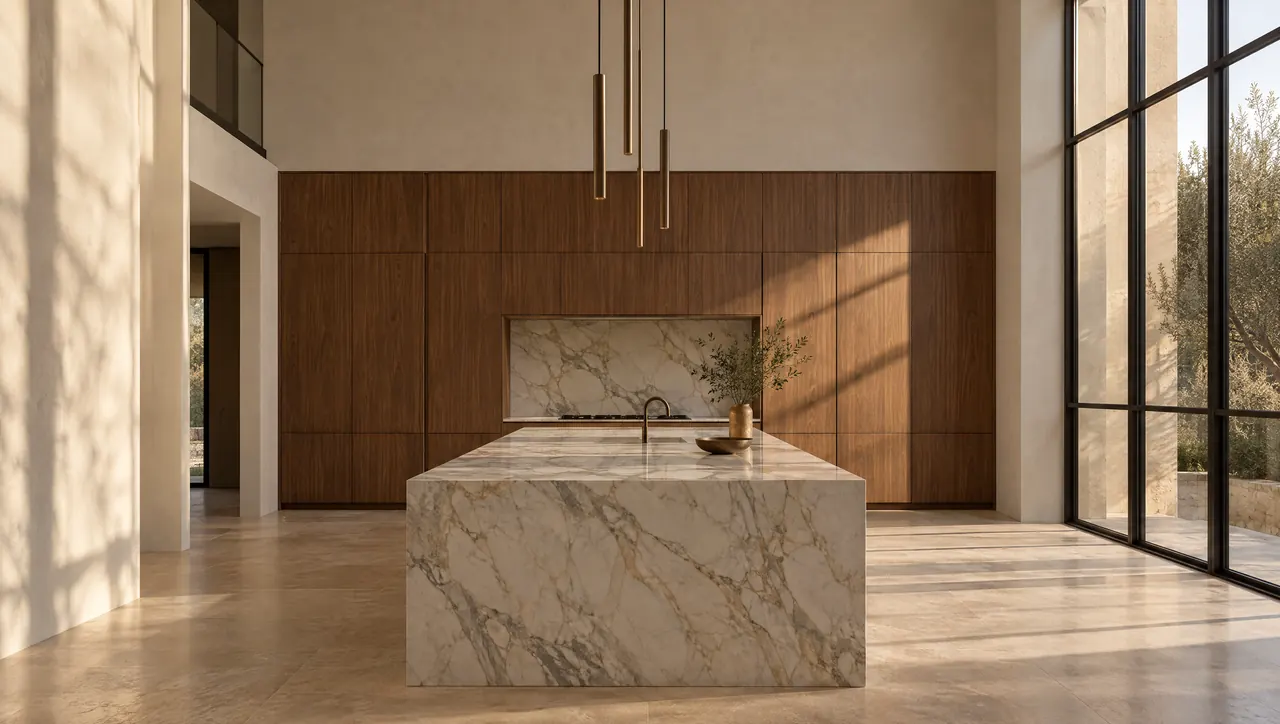
We recommend honed marble for a dedicated baking surface. It handles pastry better than anything else, and a honed finish hides the inevitable etch marks far better than a polished one. Whatever you choose, keep the rolling area free of joints: a joint catches flour and catches the pin. Our article on natural stone versus engineered surfaces goes further, and material specification is where slab size, finish and edge are fixed for fabrication.
The height
Rolling and kneading push down with body weight, so they are easier on a surface lower than a standard counter. The right height belongs to the person who bakes most, not to a rule of thumb. The National Kitchen & Bath Association's planning guidelines encourage varied counter heights for exactly this kind of task.
A dropped section is a visible step in the cabinetry, so design it on purpose. Treating it as its own piece, in a different stone or a timber top, reads as intentional. A small, unexplained drop in the same material reads as an error.
The ovens
Bakers are better served by wall ovens than by an oven under a range. Set the rack you use most near elbow height so heavy pans come out without bending. In a double stack, put the oven you use daily in the more comfortable position and the occasional one above or below it. Side-opening doors let you stand closer to the cavity.
Accuracy matters more at altitude, where high-altitude guidance often calls for a slightly hotter oven and shorter bakes. Convection helps several sheets brown evenly. A steam or combination steam oven is worth the space if you bake bread. Plan a landing surface beside every oven that can take a hot pan, and think about proofing: dry Front Range air skins dough quickly, so a proof setting or warming drawer that keeps dough covered and warm earns its place.
If / then
- If you bake bread every week
- Prioritize a steam or combination steam oven at a comfortable height, with stone landing space beside it.
- If you bake in volume for the holidays
- A double stack of full-size convection ovens, plus vertical storage for extra sheet pans and cooling racks.
- If space is tight
- One well-placed wall oven and a combination steam oven stacked above it cover most baking without a second full wall.
- If two people bake together
- Separate the ovens from the rolling surface by a short walk, so one person can work dough while the other loads pans.
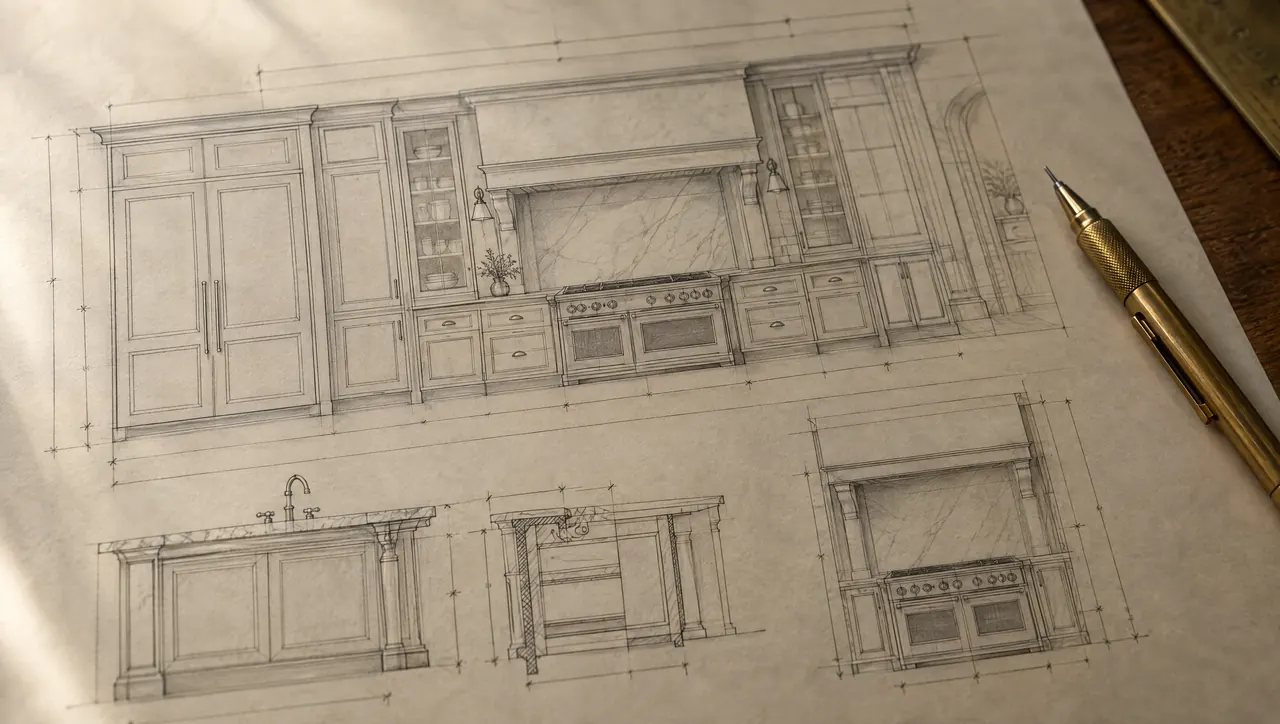
Panels, ventilation clearances and door swings are resolved during appliance integration.
The storage
Everything a baker reaches for should be within a step of the work surface.
- Flour and sugar in lidded bins inside deep drawers directly below the rolling area, so you scoop without carrying.
- Sheet pans, cutting boards and cooling racks stored vertically in dividers beside or above the ovens.
- A scale, measuring cups and spoons in a shallow fitted drawer at the top.
- Rolling pins, cutters and piping tips in a drawer with fixed compartments.
- The stand mixer on a lift mechanism in a base cabinet, or in a counter-level appliance garage with a door that closes over it.
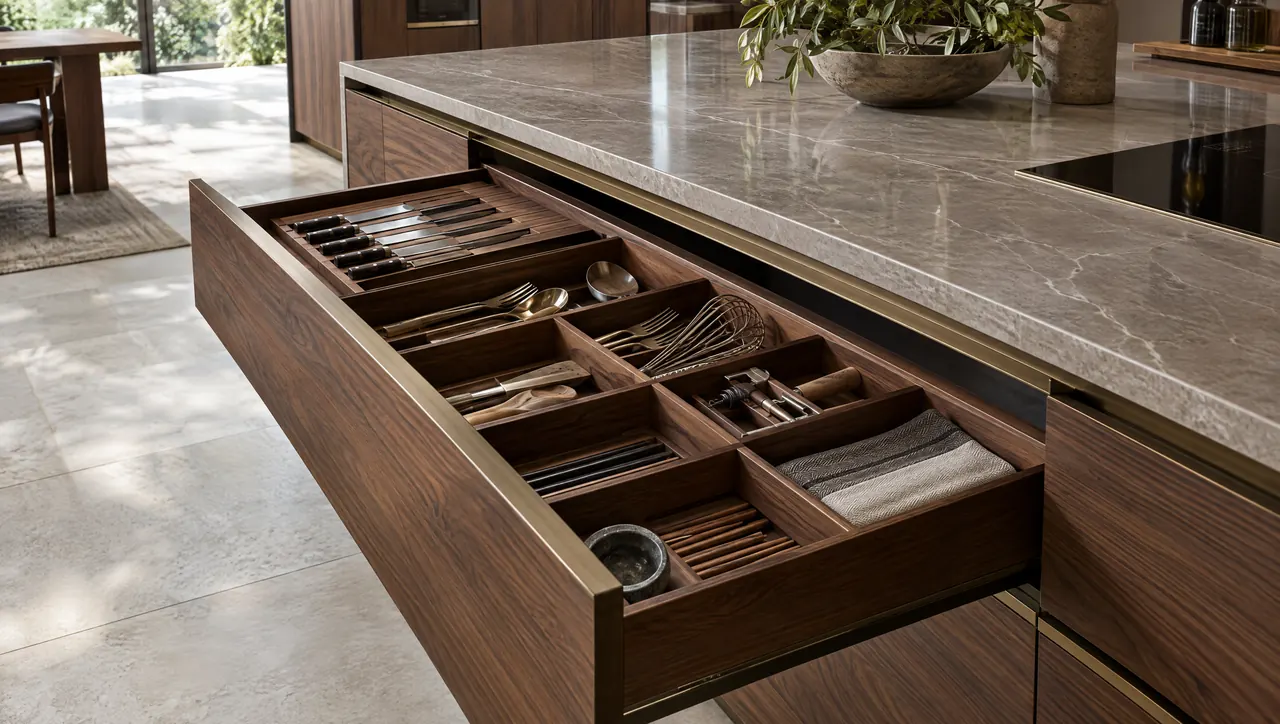
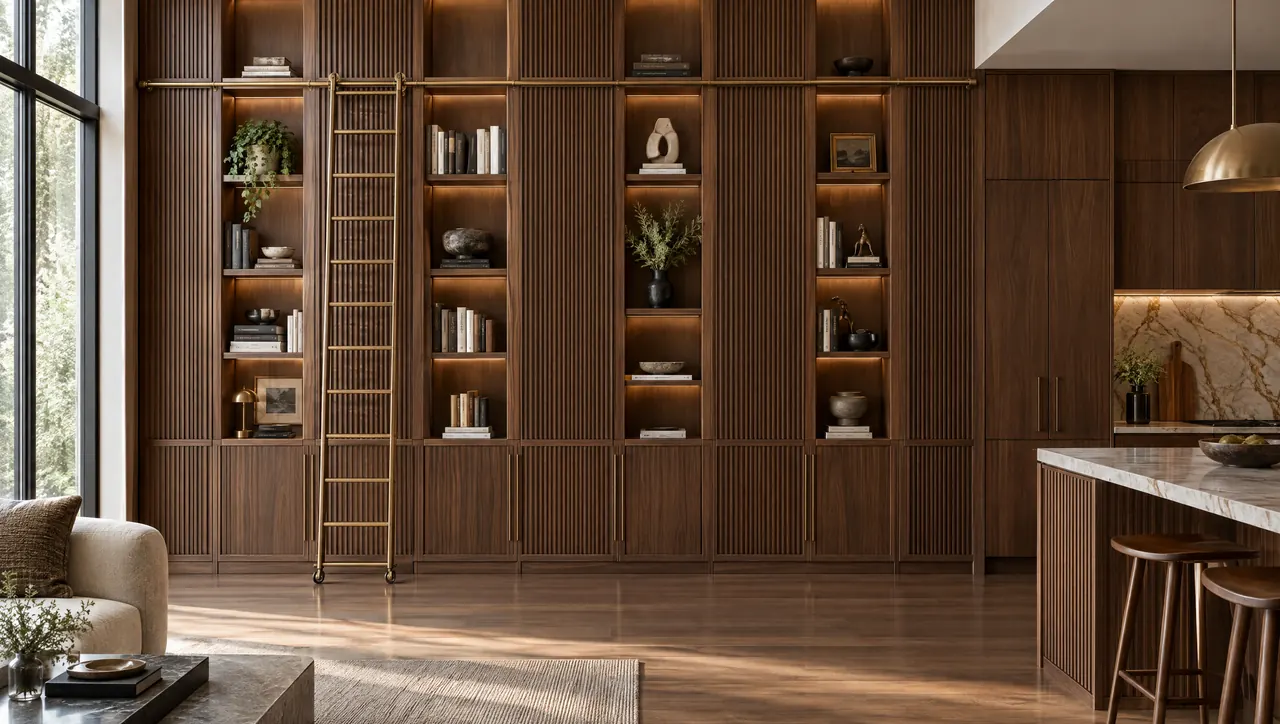
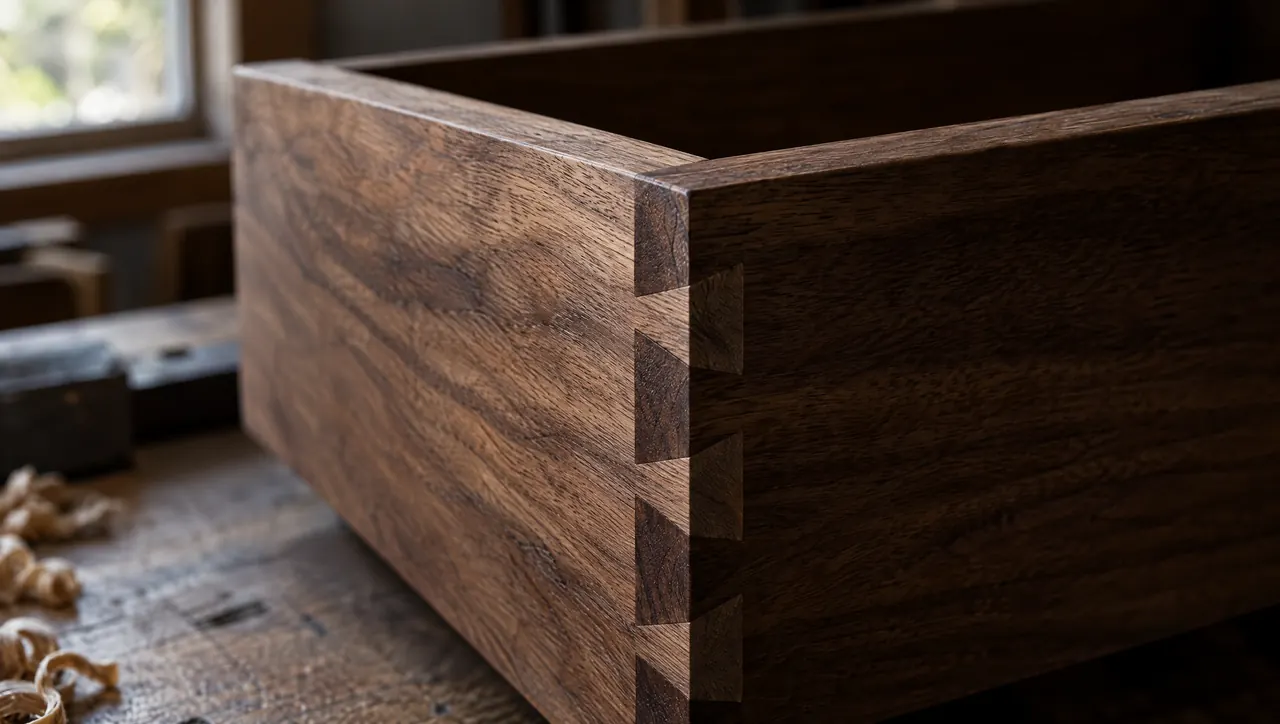
Flour is heavy, and baking drawers open many times a day. Drawer boxes and runners need to be built for that load, which is a matter of custom cabinetry detailing, and our craft and materials page covers the construction we favor. For hiding the mixer and bulk supplies, see our piece on concealed kitchen storage.
The power
Plan outlets where each appliance actually lives: inside the appliance garage, at the top of the mixer lift and along the rolling surface for a scale or food processor. Wall ovens and steam ovens have their own electrical requirements, and some steam models need a water supply and drain. Electrical and plumbing requirements vary, so confirm them with your electrician and your city before the drawings are final.
Light belongs here too. A task light directly over the work surface, with good color rendering, lets you judge dough and browning accurately. Lighting integration places it so your head does not cast a shadow on the stone.
The bottom line
If you change only one thing, make it a lowered, joint-free section of honed marble set at the baker's own height, a few steps from the ovens. Surface and height shape every batch; the rest can be refined around them.
Planning a kitchen where baking matters? Tell us how you bake and we will talk through a station shaped around it.