Craft & Materials · An exhibition
The Material Archive
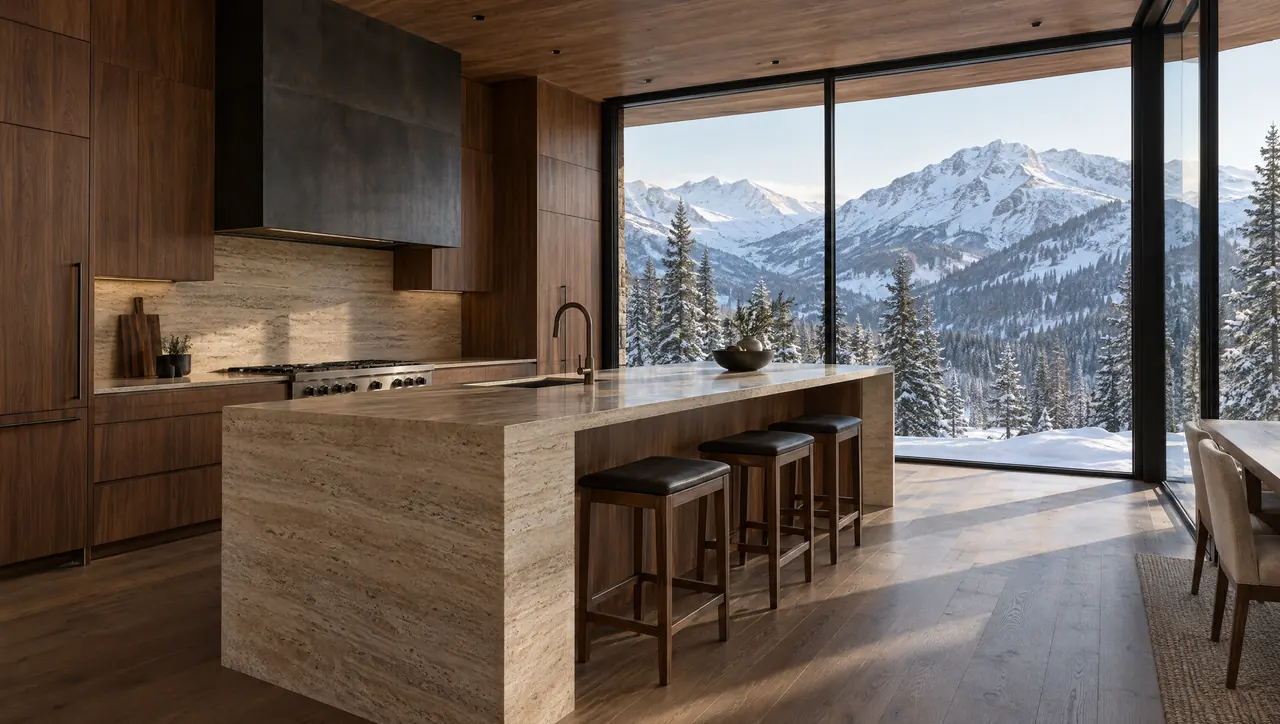
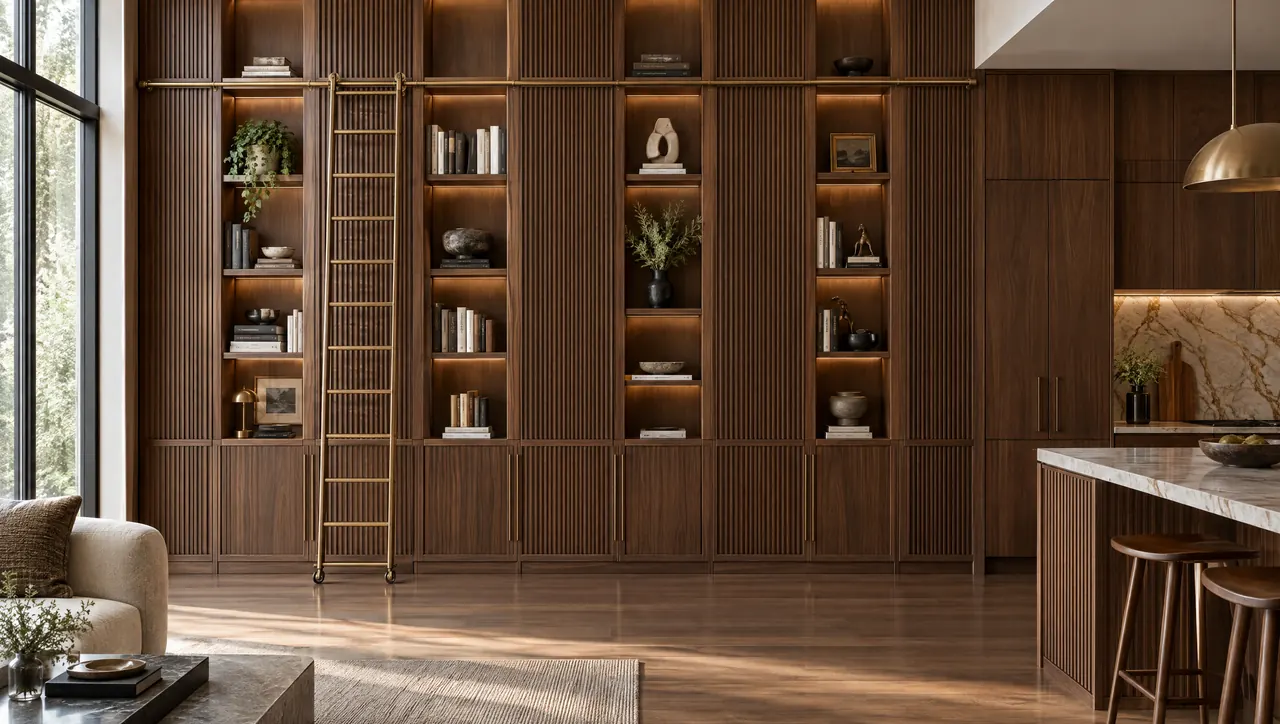
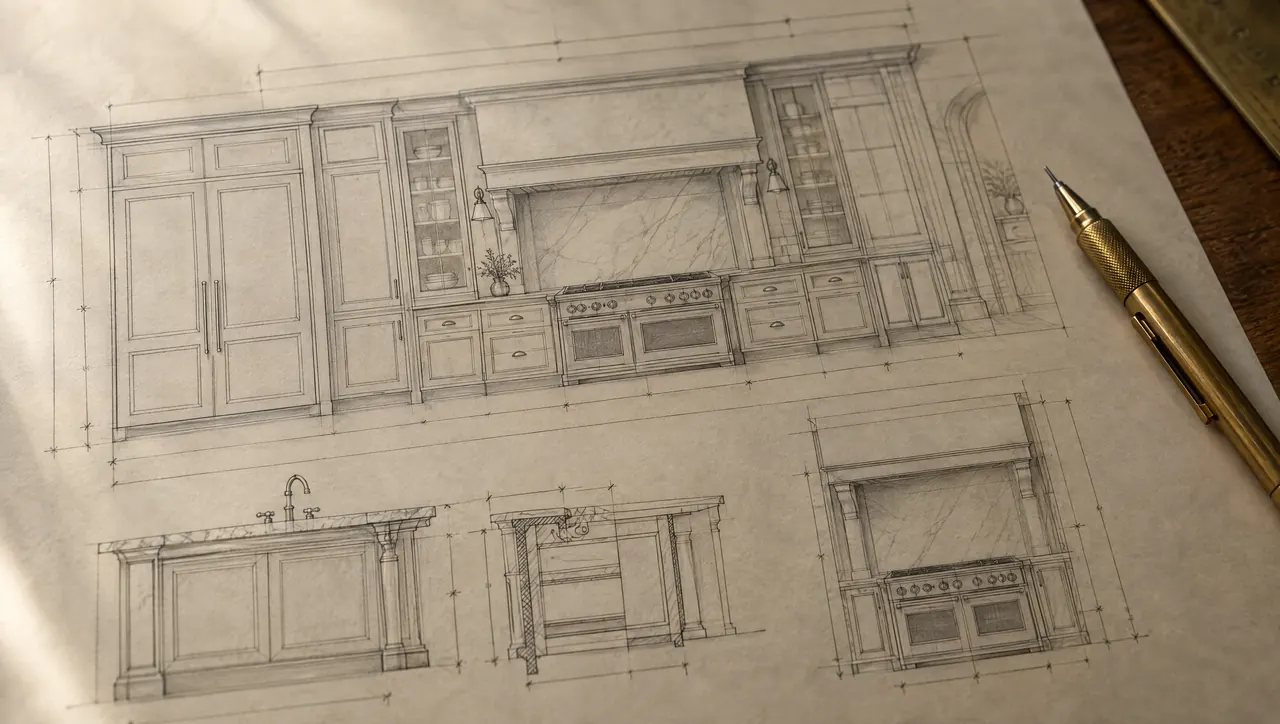
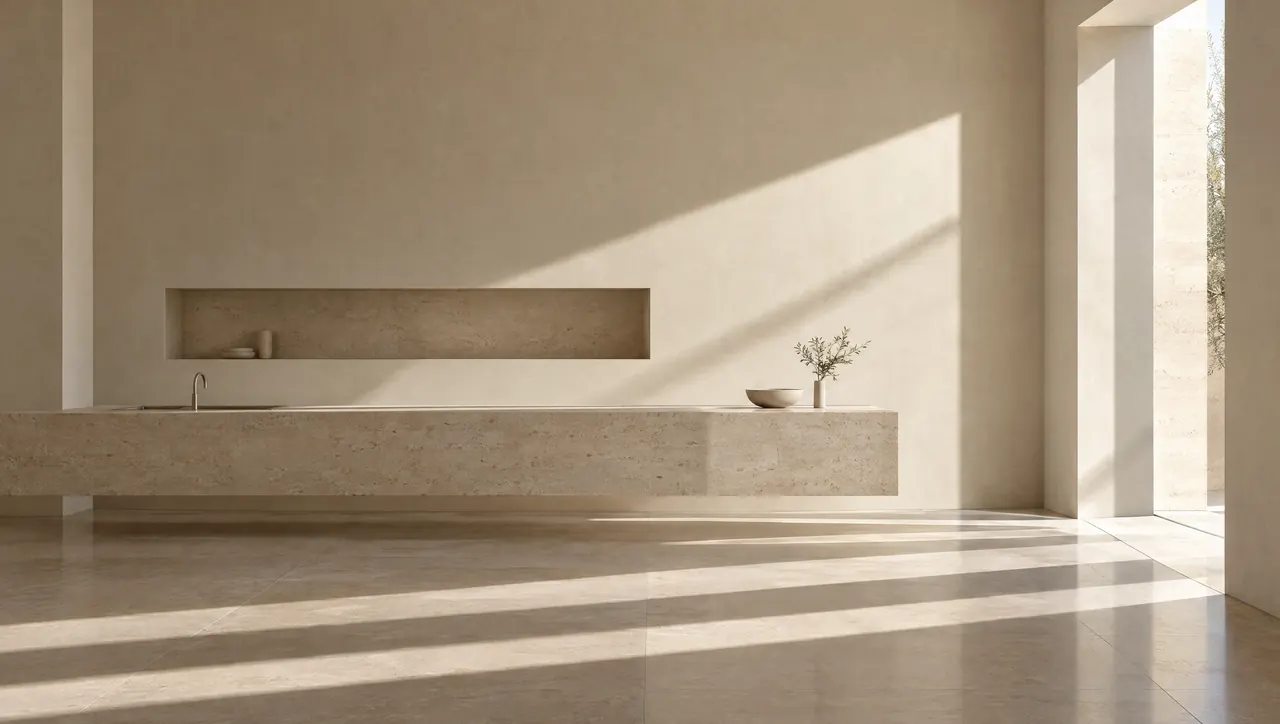
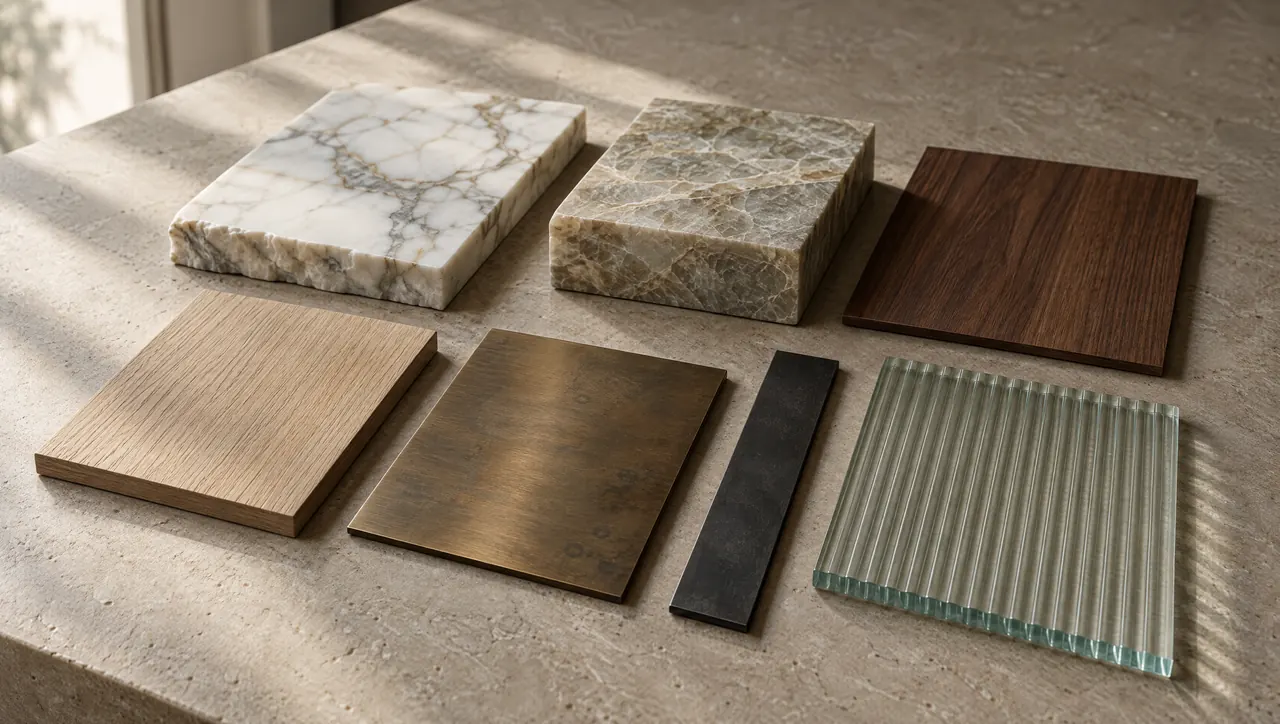
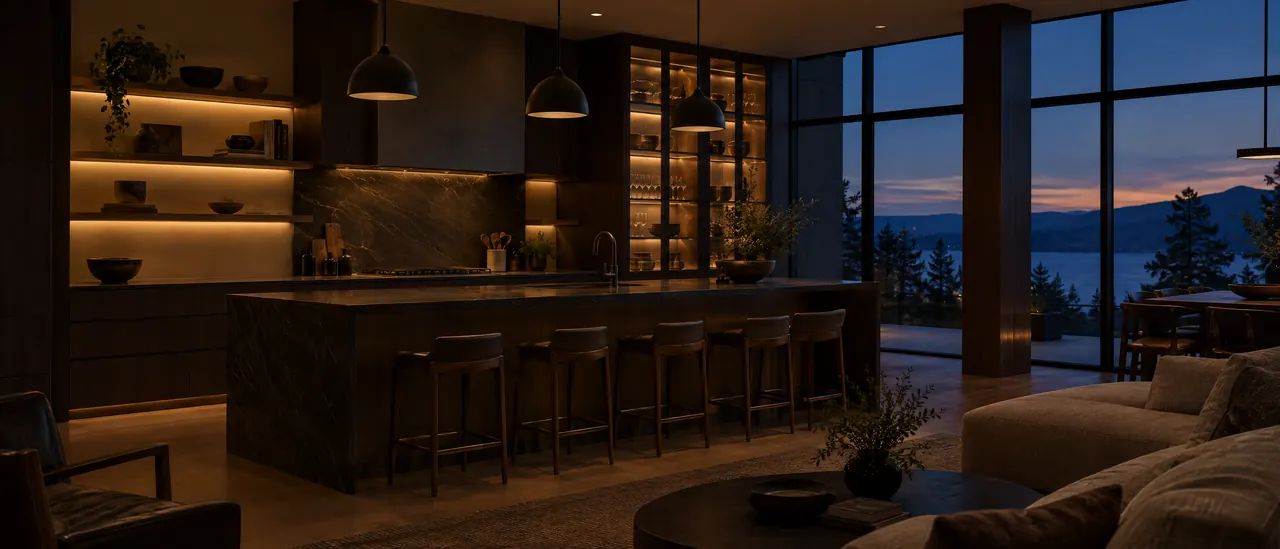
Cabinetry, joinery, stone, wood and metal, seen at the distance where craft becomes visible. Every material here is selected for how it ages, performs and belongs within the architecture.
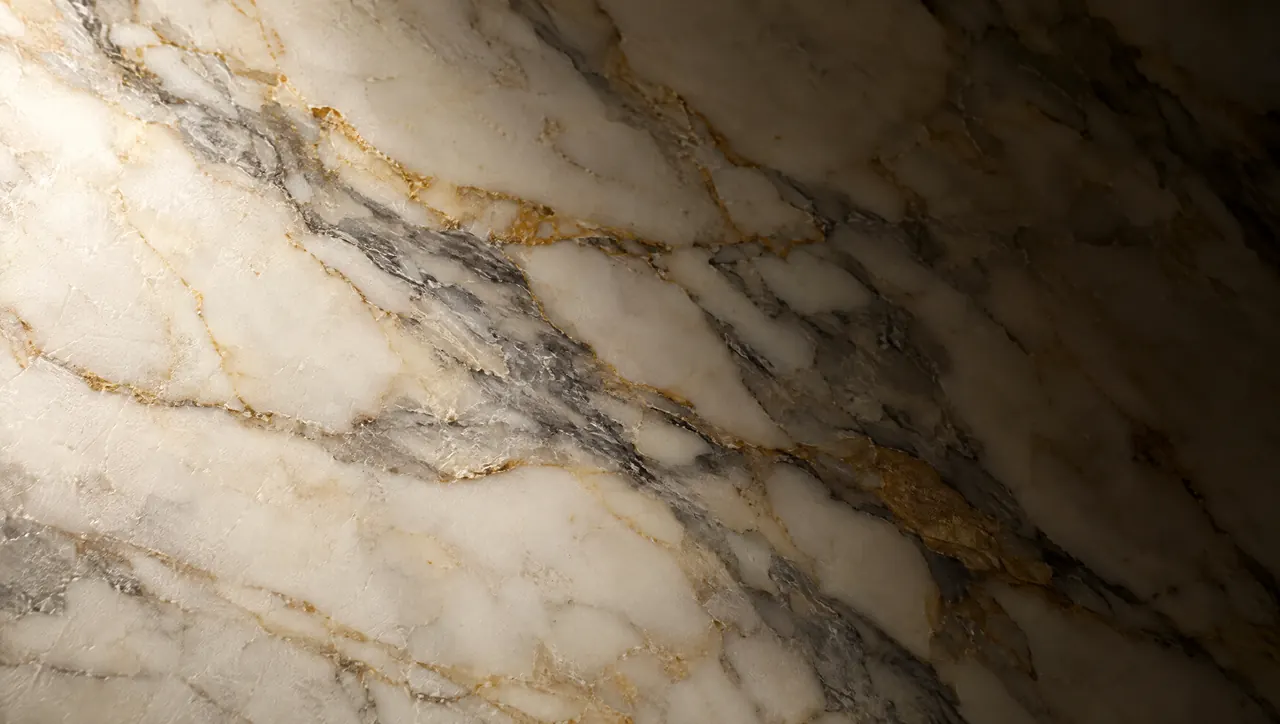
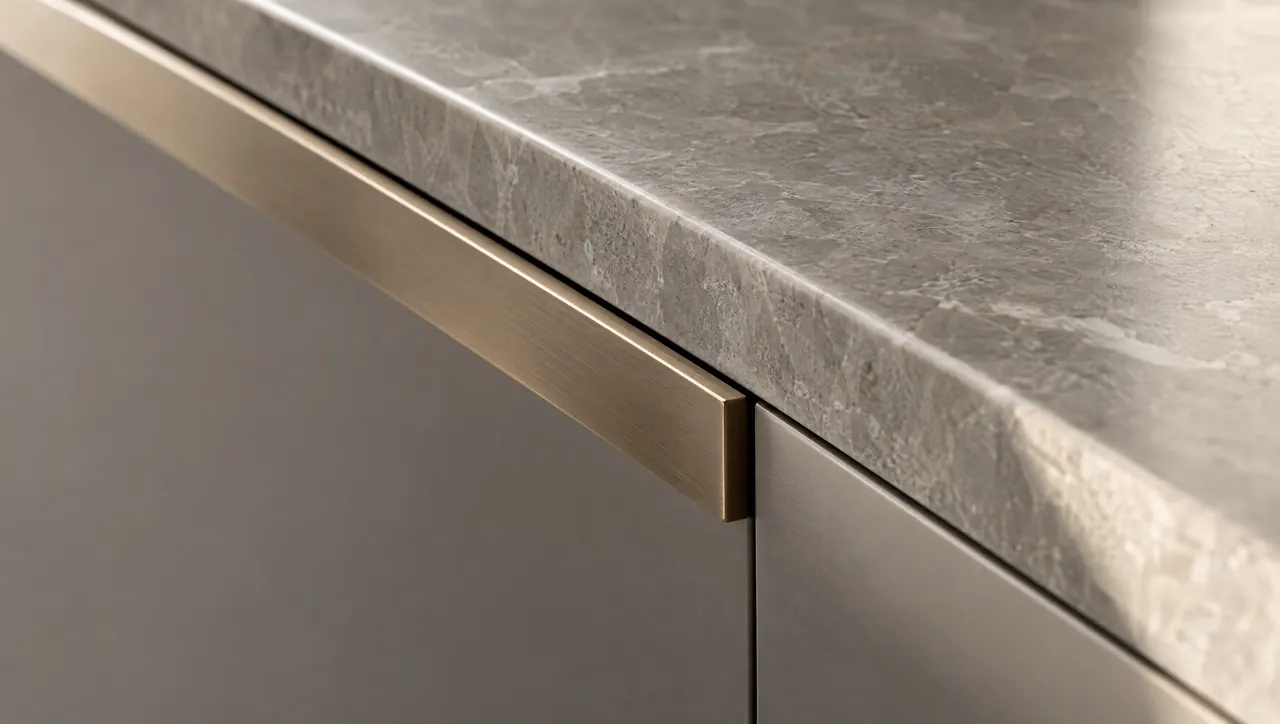
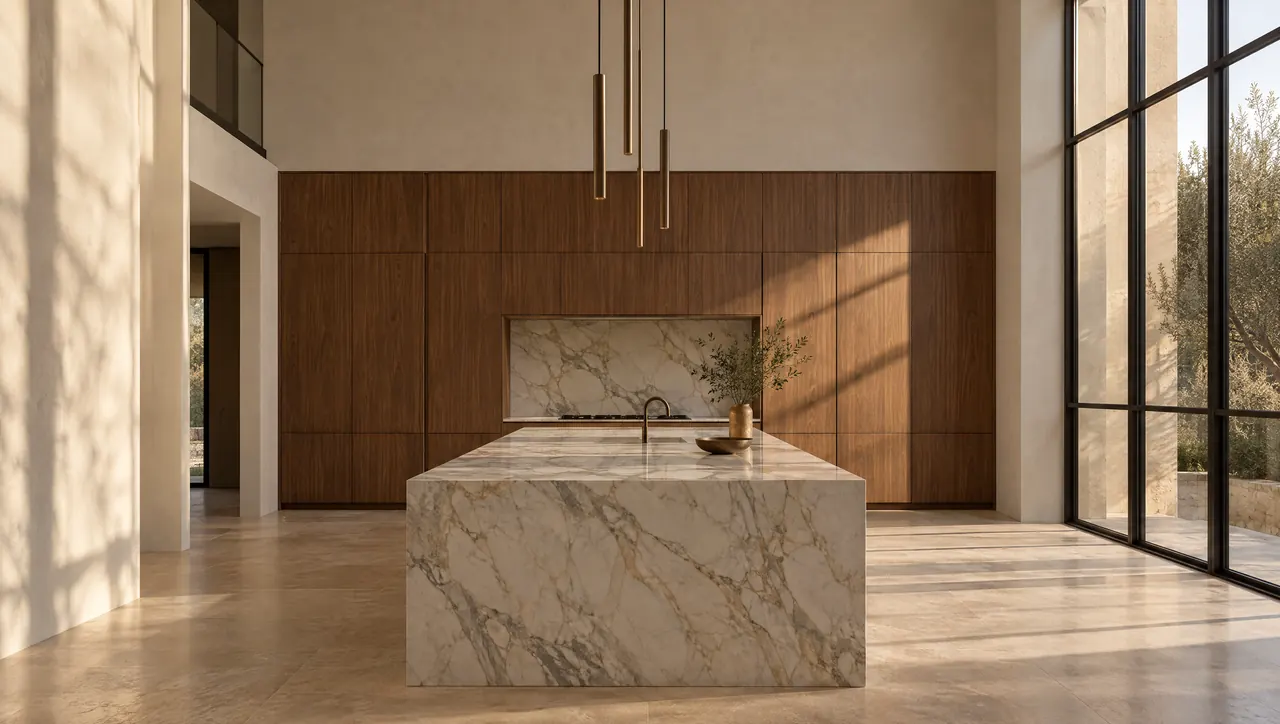
Calacatta marble · Raking light
No two slabs are alike.
So every one is chosen in person, and its veining is planned across the room before anything is cut.
Gallery I
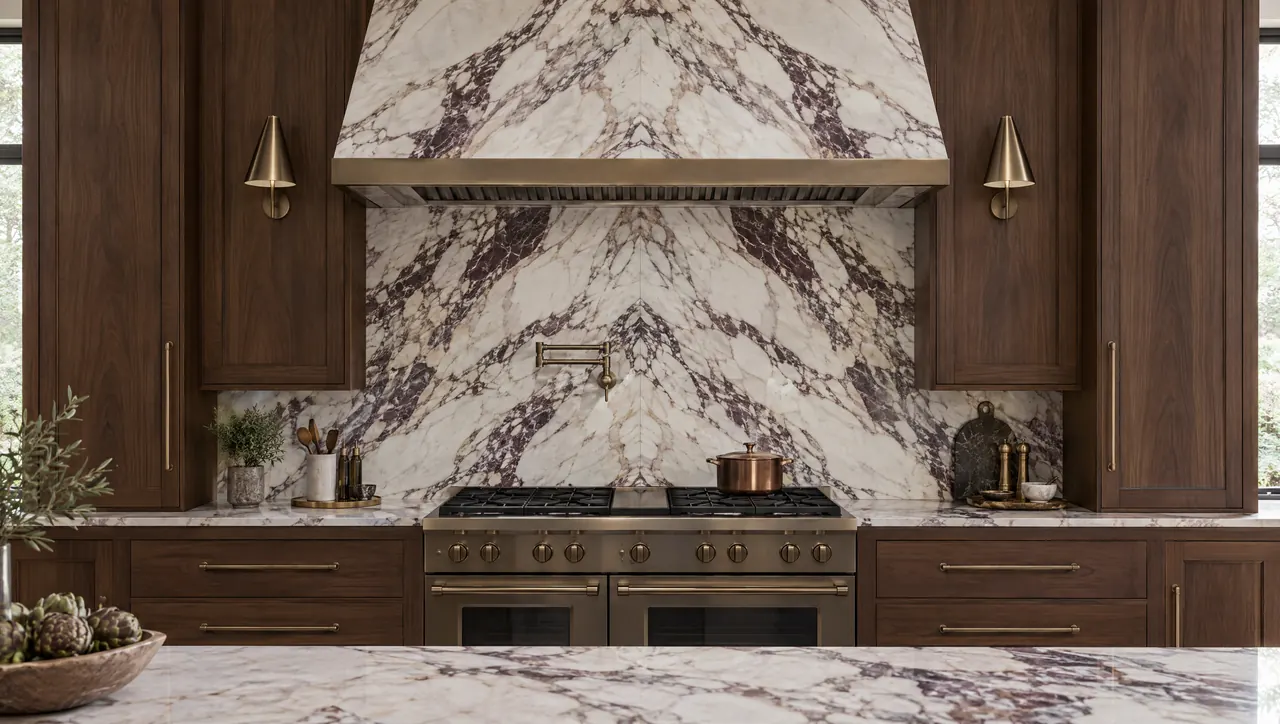
Calacatta Stone
- Material
- Calacatta marble
- Type
- Natural metamorphic stone
- Finish
- Honed or polished
- Application
- Backsplash, island, wall
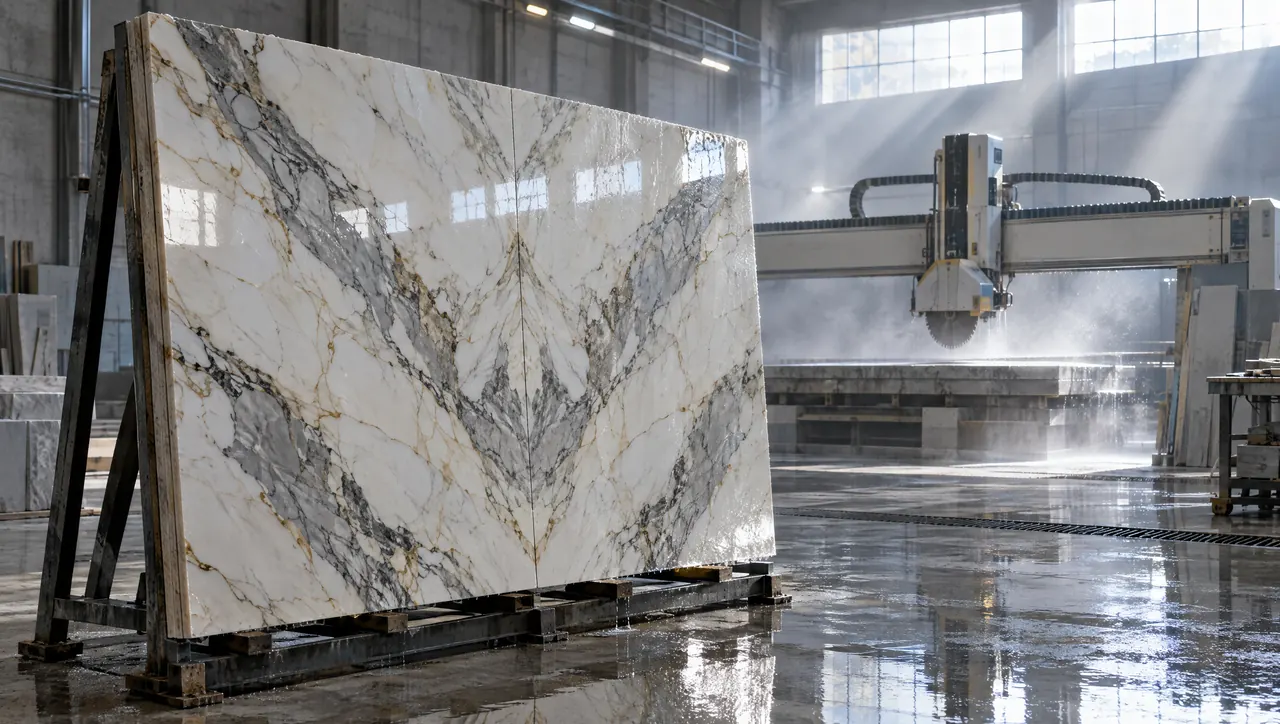
Planned before it is cut.
No two slabs of natural stone are alike. Veining is planned across an island, a backsplash or a wall before anything is cut, and bookmatched slabs are opened like the pages of a book so the pattern mirrors across the joint.
Marble is calcite-based and will etch with acids, which is part of how it ages. Compare natural stone and engineered surfaces.
Gallery II
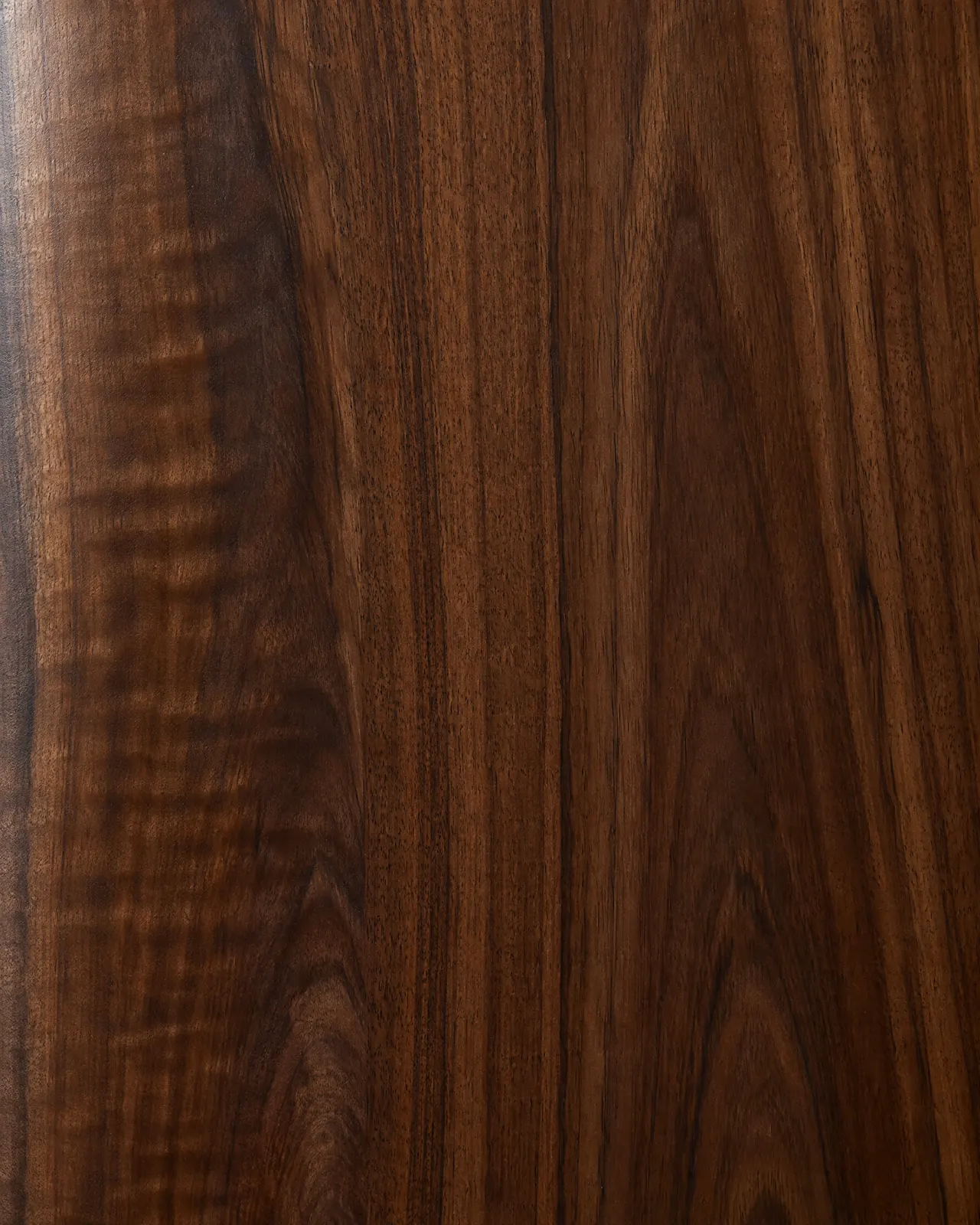
Walnut
- Material
- American black walnut
- Cut
- Rift-sawn
- Finish
- Oiled, satin
- Application
- Cabinetry, millwork
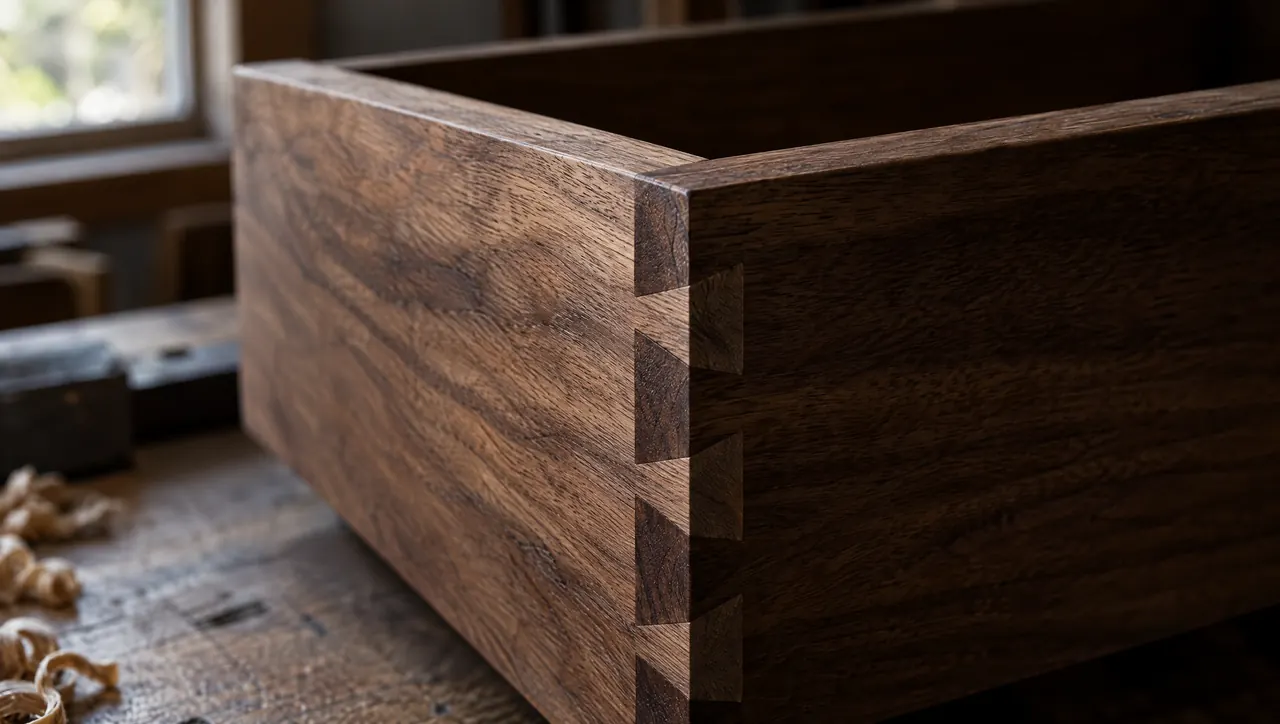
Grain. Joinery. Finish.
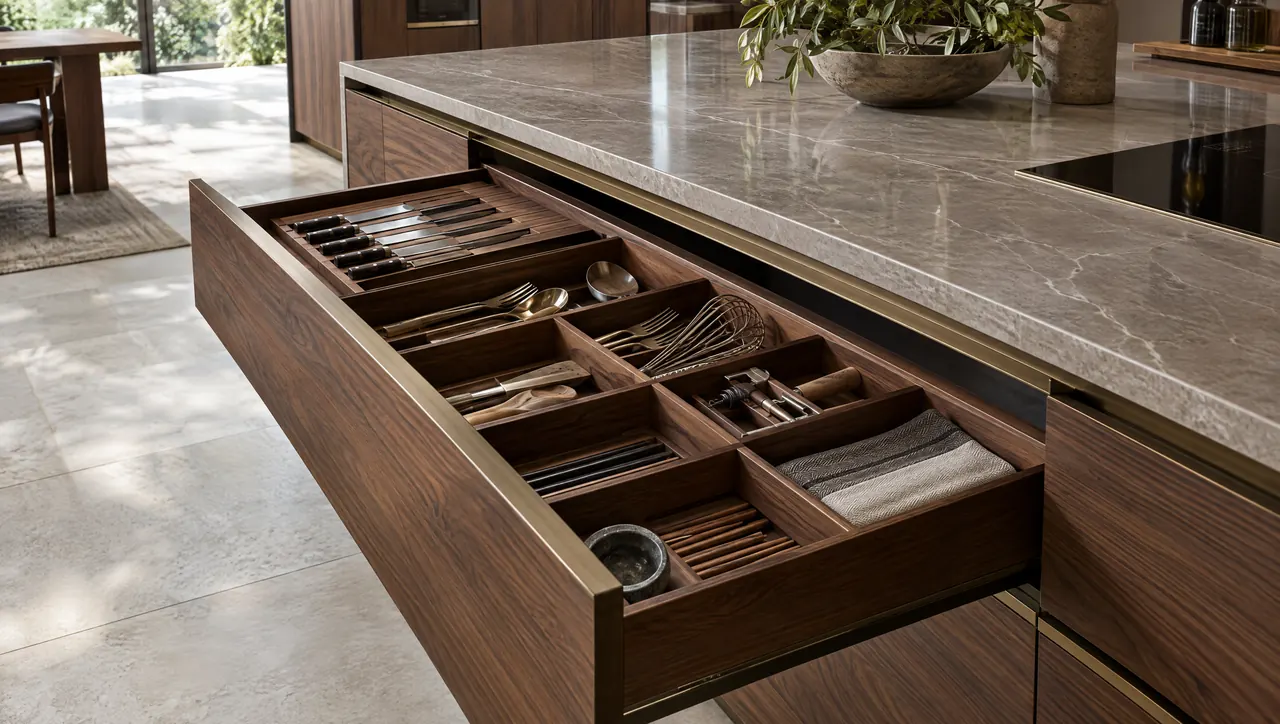
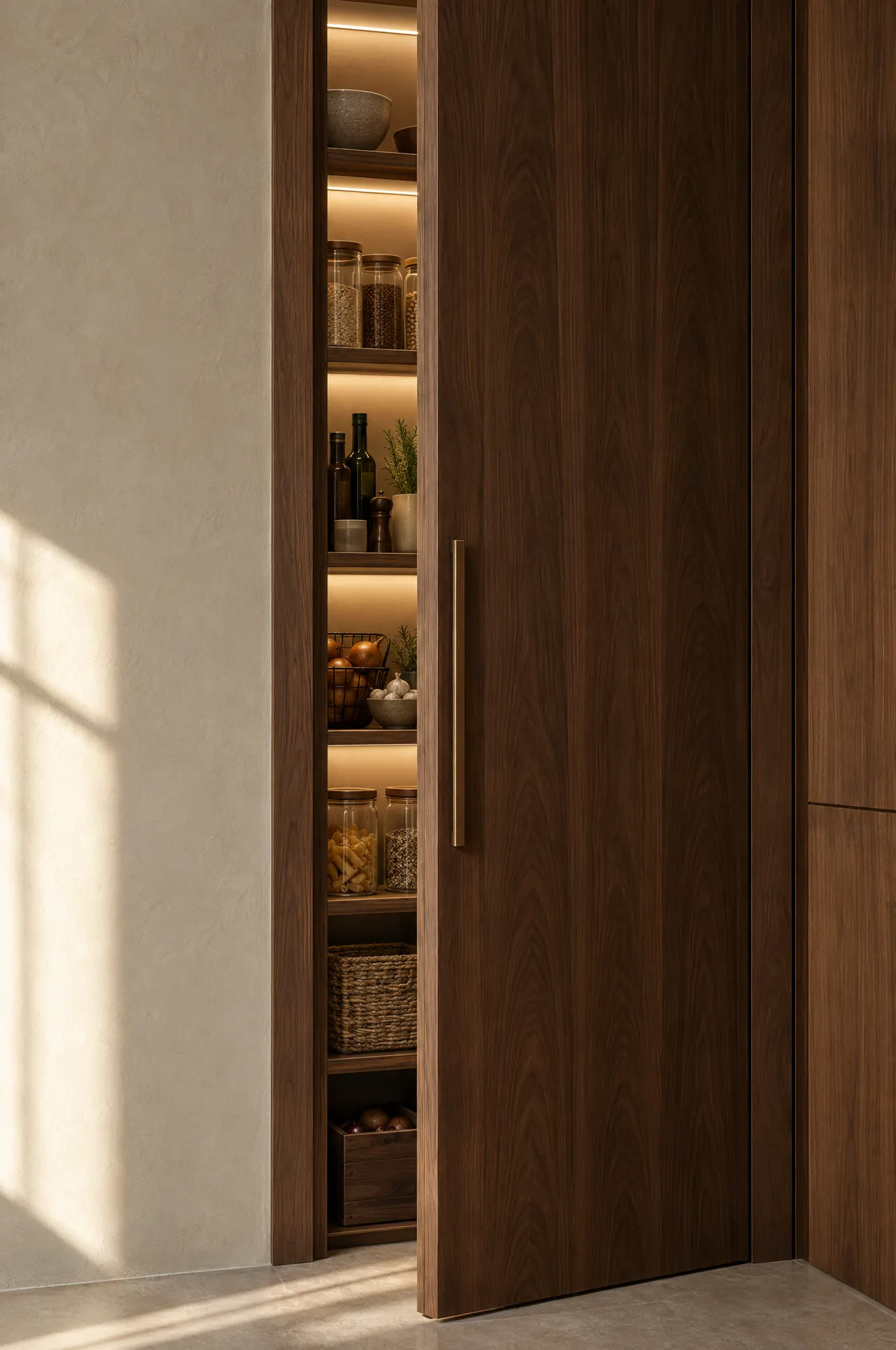
Rift-sawn walnut gives a straight, calm grain that reads as one surface across a tall wall of doors. Joinery is part of the design: dovetails at a drawer corner are meant to be seen and to last.
An oiled finish lets the wood deepen and warm with time rather than sitting under a plastic film.
Gallery III
Bronze
- Material
- Bronze
- Type
- Copper alloy
- Finish
- Hand-brushed, living
- Application
- Hardware, trim, hoods
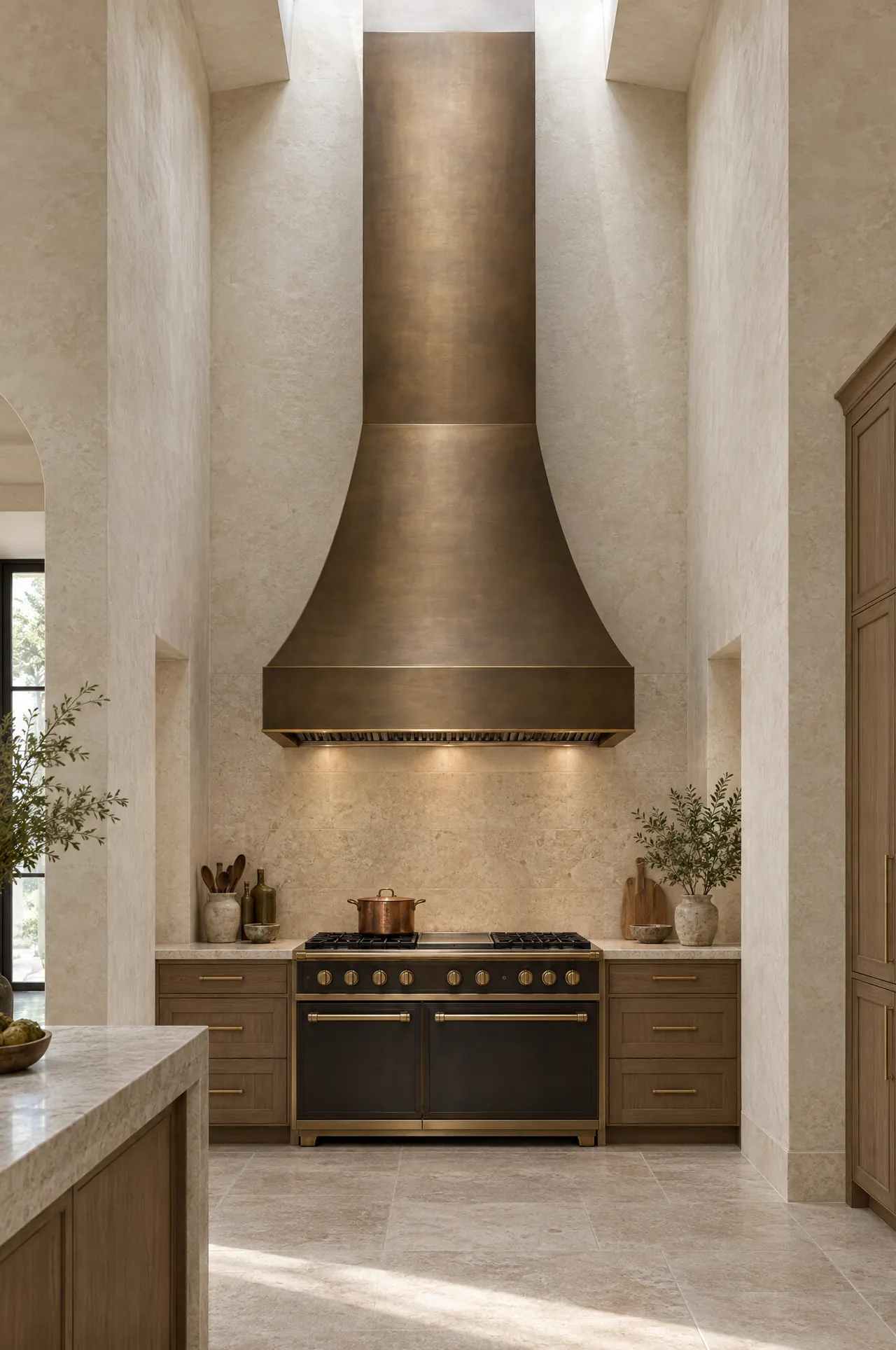
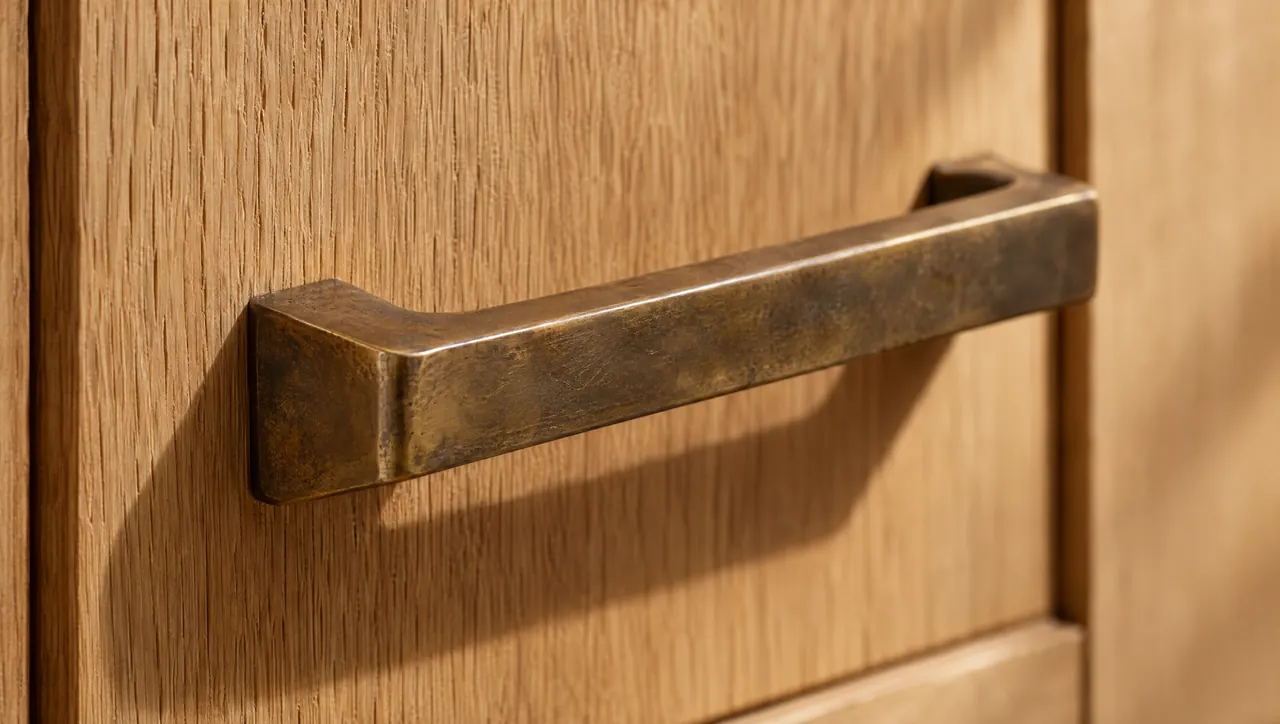
Patina, not plating.
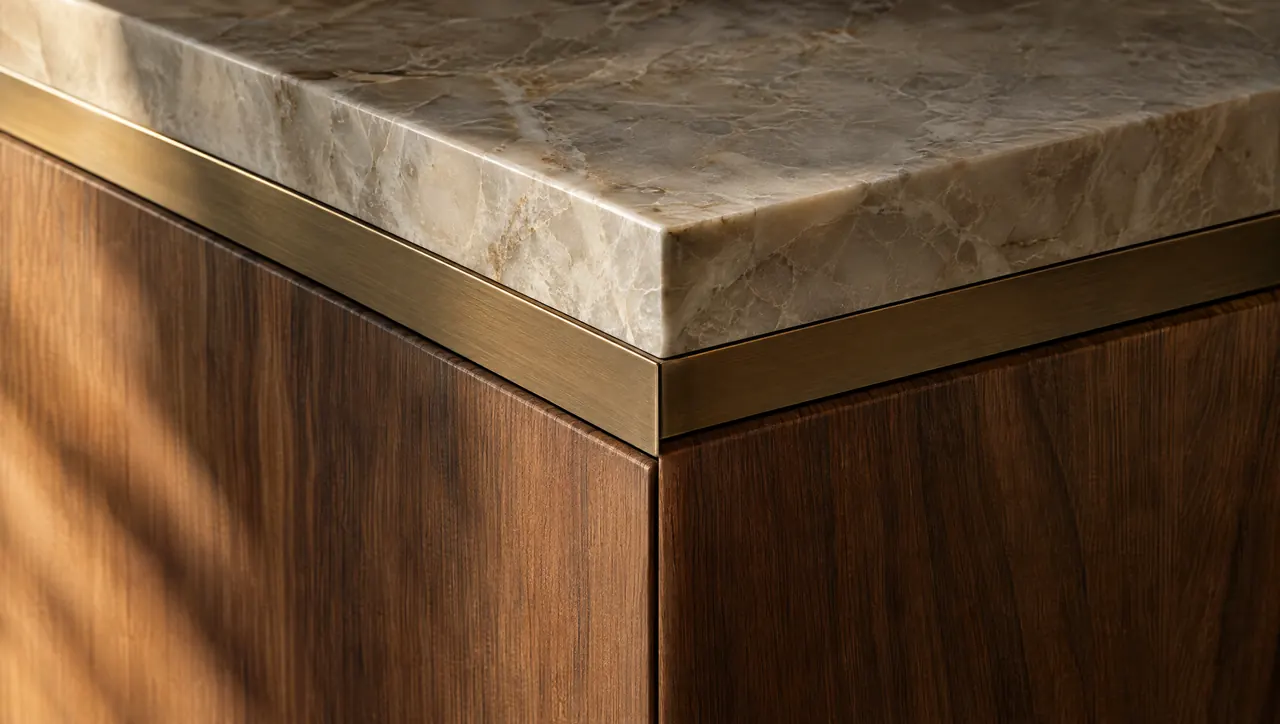
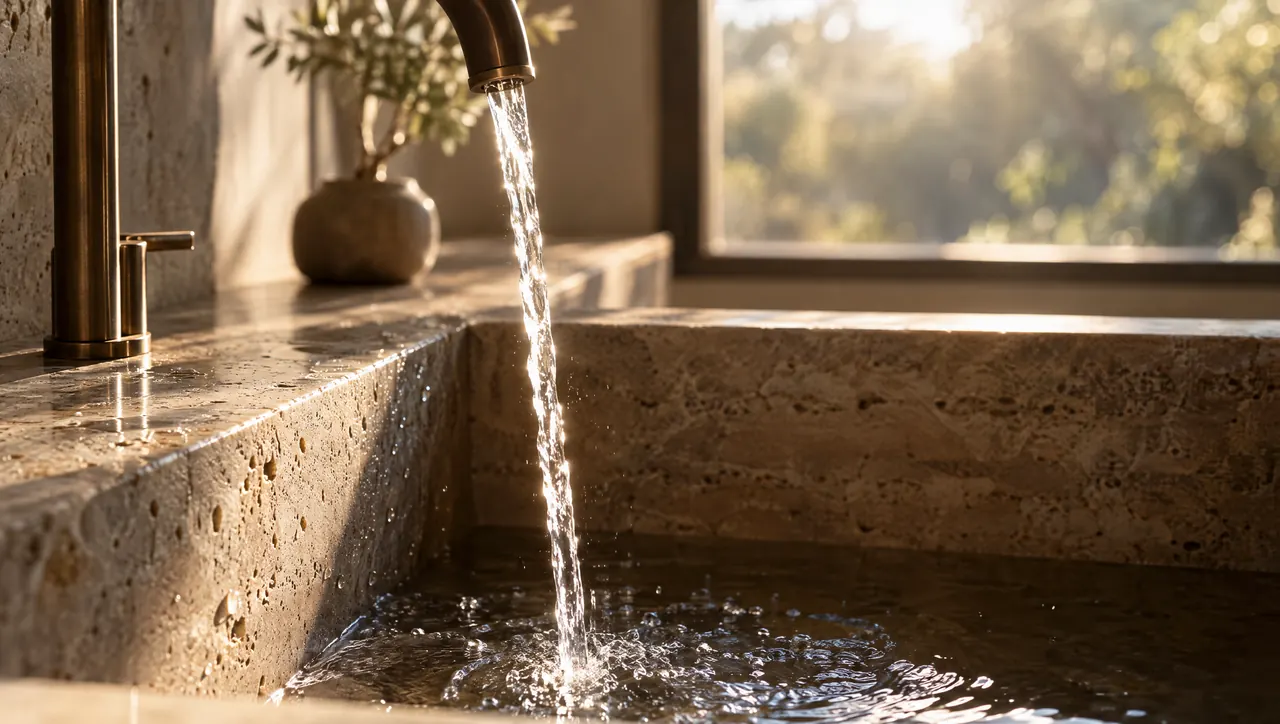
A living bronze finish changes with use. Edges that are touched every day brighten, recesses darken, and the hardware begins to record the life of the kitchen.
Bronze is used sparingly, as a material rather than a decoration: a pull, a trim line, a hood that anchors a room.
Gallery IV · Drag to explore
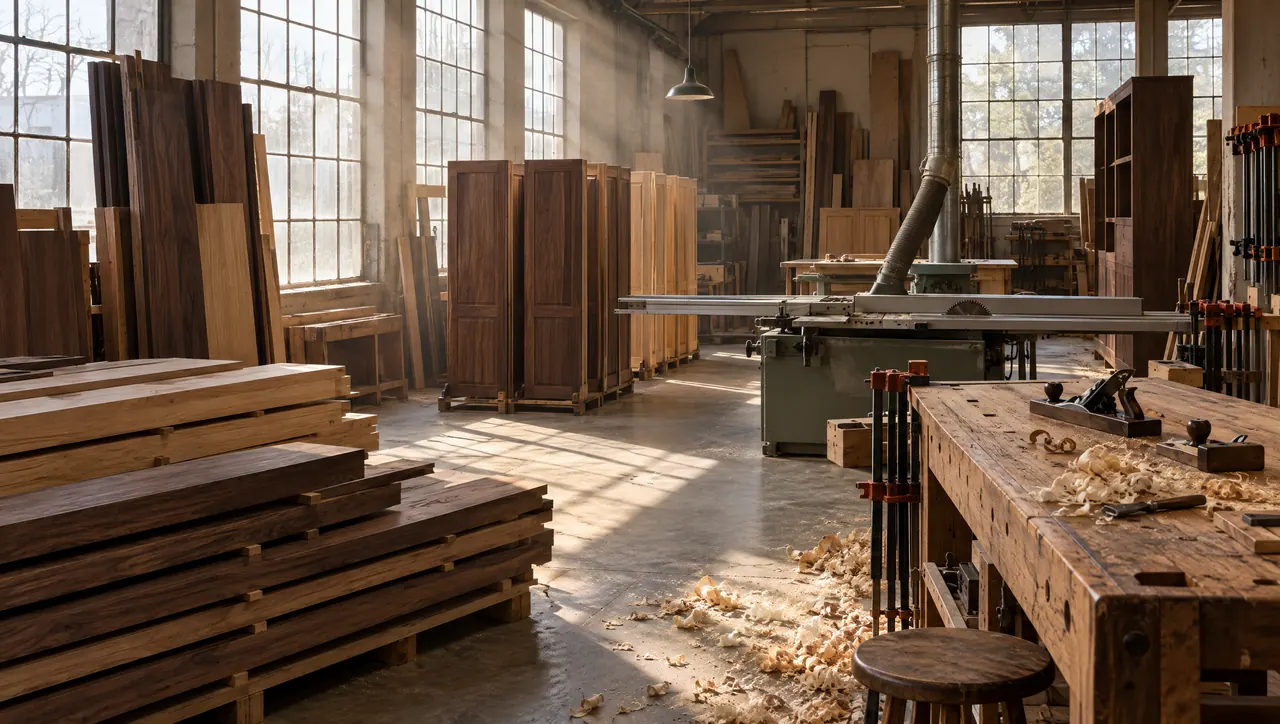
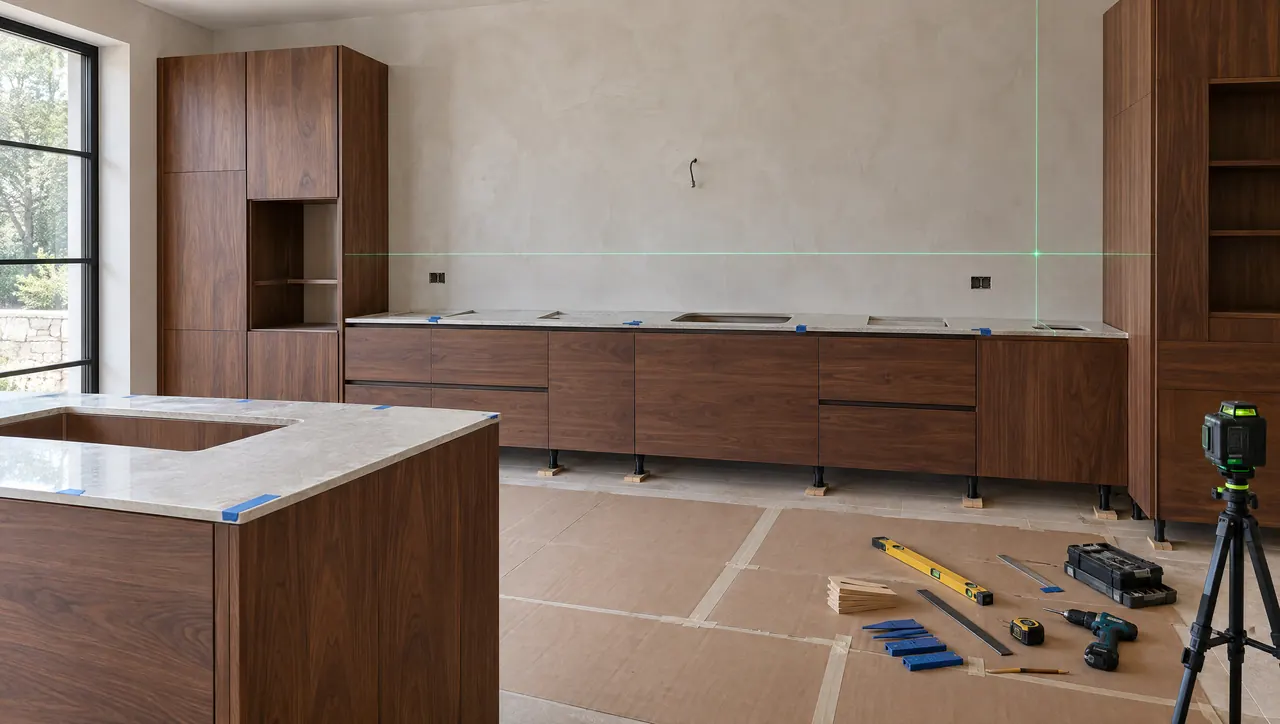
Cabinetry, fabrication, installation.