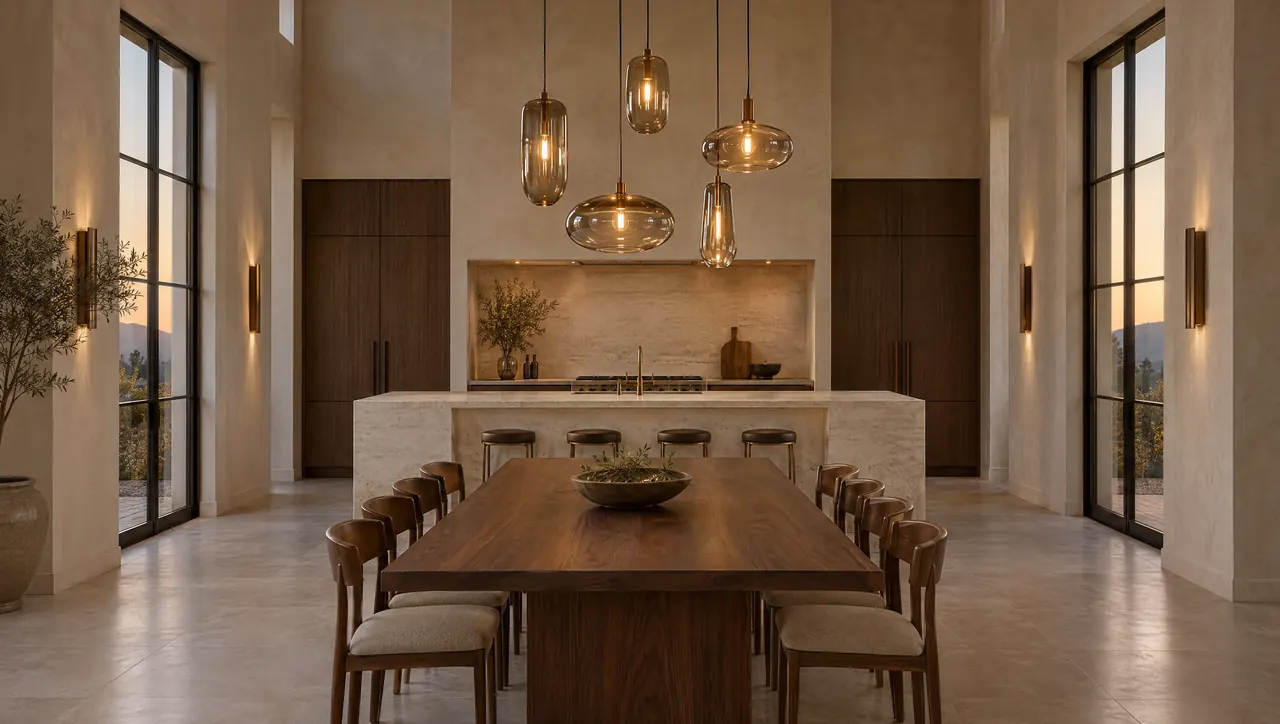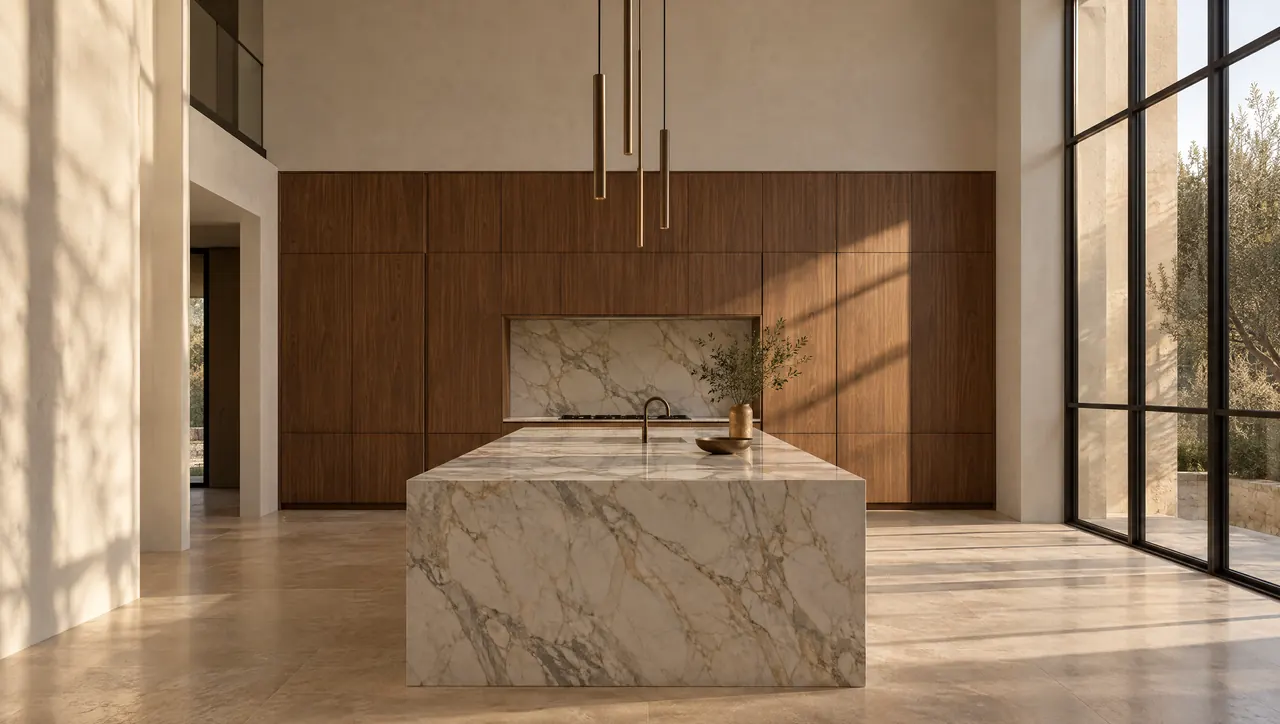
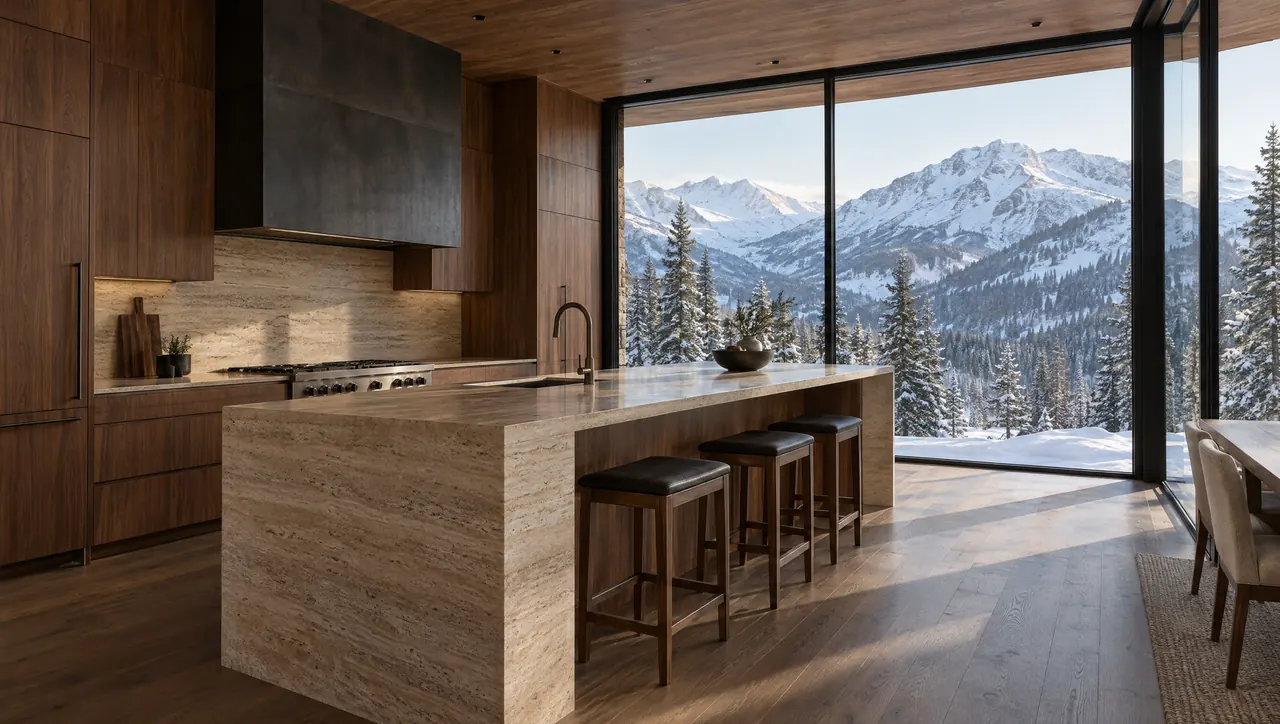
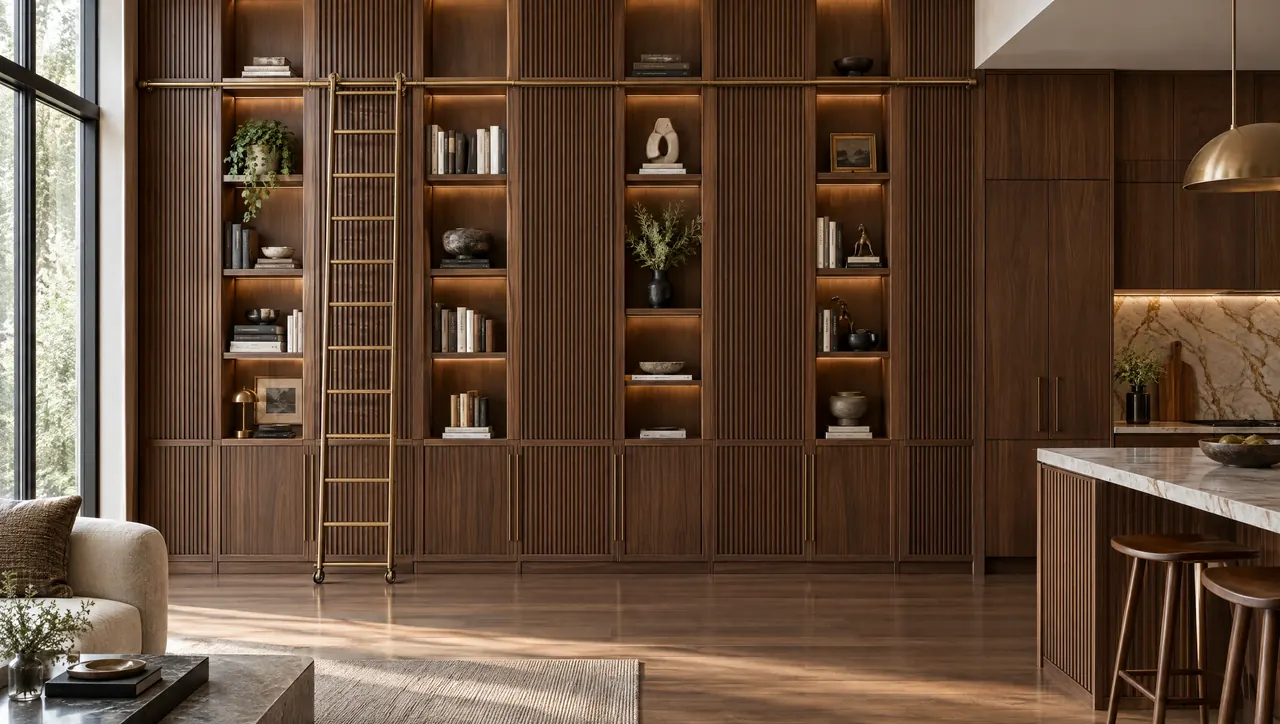
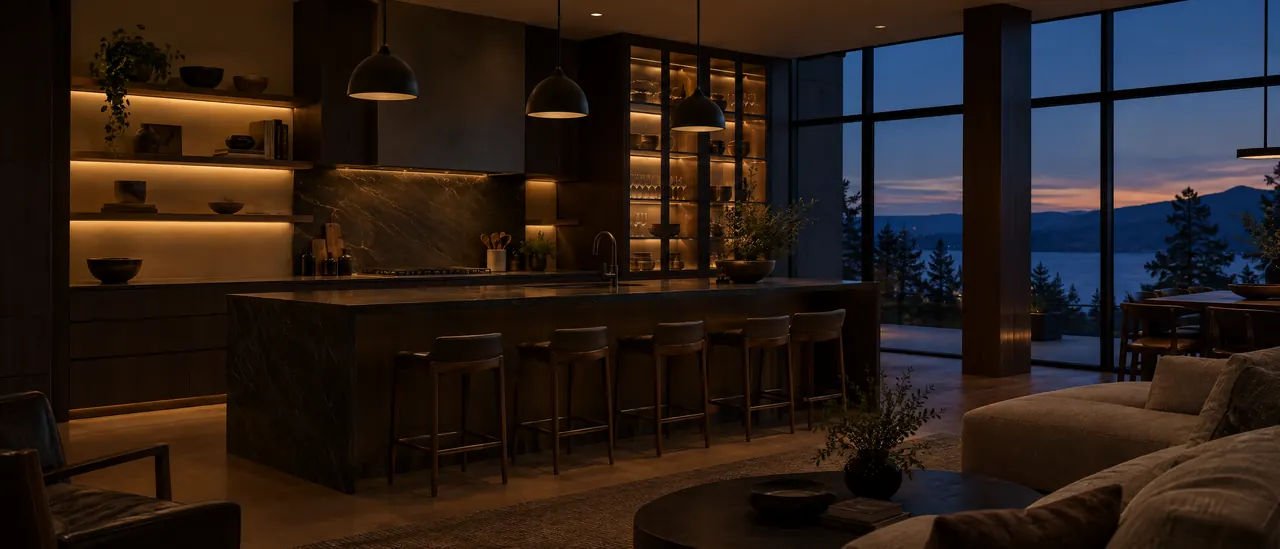
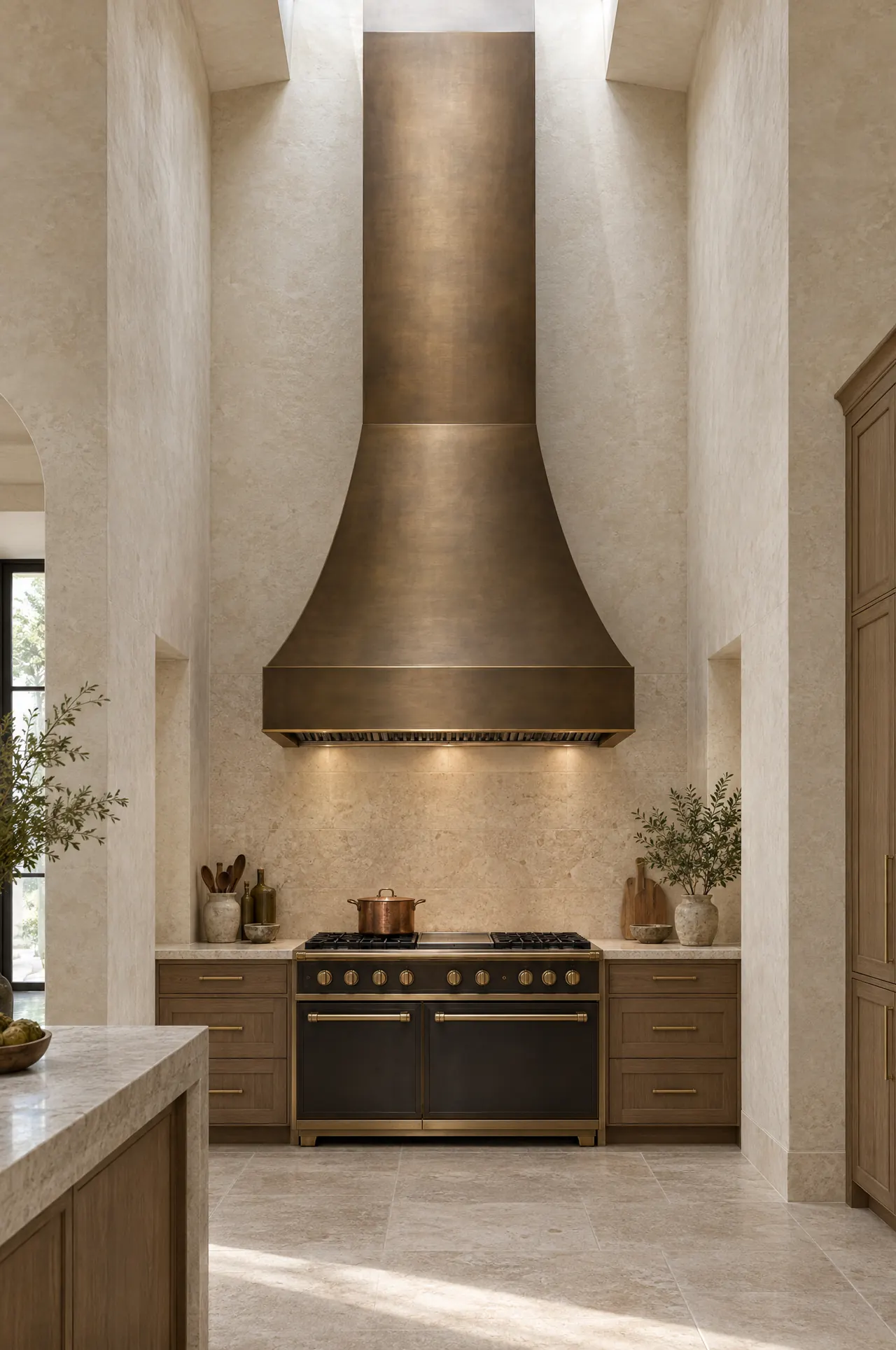
Good range hood design comes down to two jobs: capture the smoke, steam and grease where they rise, then move them out of the house quietly enough that you leave the fan running. Once those are solved, the hood can be as present or as invisible as the room asks.
The weeks before Thanksgiving are when a hood earns its place. A bird roasting for hours, drippings reduced over high heat, stock at the back of the range: holiday cooking produces more heat and moisture for longer than a weeknight dinner, and on the Front Range the windows are usually shut by now. If smoke hangs at ceiling height or the smell reaches the bedrooms, the hood is not doing its work, however good it looks.
What makes a hood work
Hot air rises in a plume that widens as it climbs. A hood catches that plume in its canopy and holds it long enough for the fan to draw it away, so the shape and position of the hood matter as much as the fan inside it.
- Width. We recommend a canopy at least as wide as the cooking surface, and wider where the layout allows, so the edges of the plume do not slip past the sides.
- Depth. The hood should reach far enough forward to cover the front burners, where most searing happens.
- Height. Lower captures better, but too low crowds the cook. Follow the manufacturer's installation instructions for mounting height, which vary by model and fuel.
- Exhaust. Duct to the outdoors. Recirculating hoods filter some grease and odor but return heat and moisture to the room. With gas cooking, combustion byproducts are another reason to vent outside.
- Noise. A hood too loud to use stays off. The Home Ventilating Institute certifies airflow and sound ratings for many products, so ask for certified figures rather than marketing claims. Remote or inline blowers, mounted away from the kitchen, take much of the motor noise out of the room.
Range hood design by type
Most residential hoods fall into four families. They differ less in the fan than in how well their position lets them catch the plume.
| Type | Capture | Ducting | Presence in the room | Best suited to |
|---|---|---|---|---|
| Wall hood | Strong. The wall behind the range contains the plume on one side. | Usually the simplest route, up or straight out through the wall behind. | A visible canopy, from a slim metal shell to a sculpted form. | Ranges and cooktops on a perimeter wall. |
| Island hood | Weaker than a wall hood of the same size, because the plume is open to drafts on every side. Generally needs a larger canopy. | Up through the ceiling, which needs a clear path through the structure above. | Hangs in the middle of the room and in every sightline. | Open plans where the cook must face the room. |
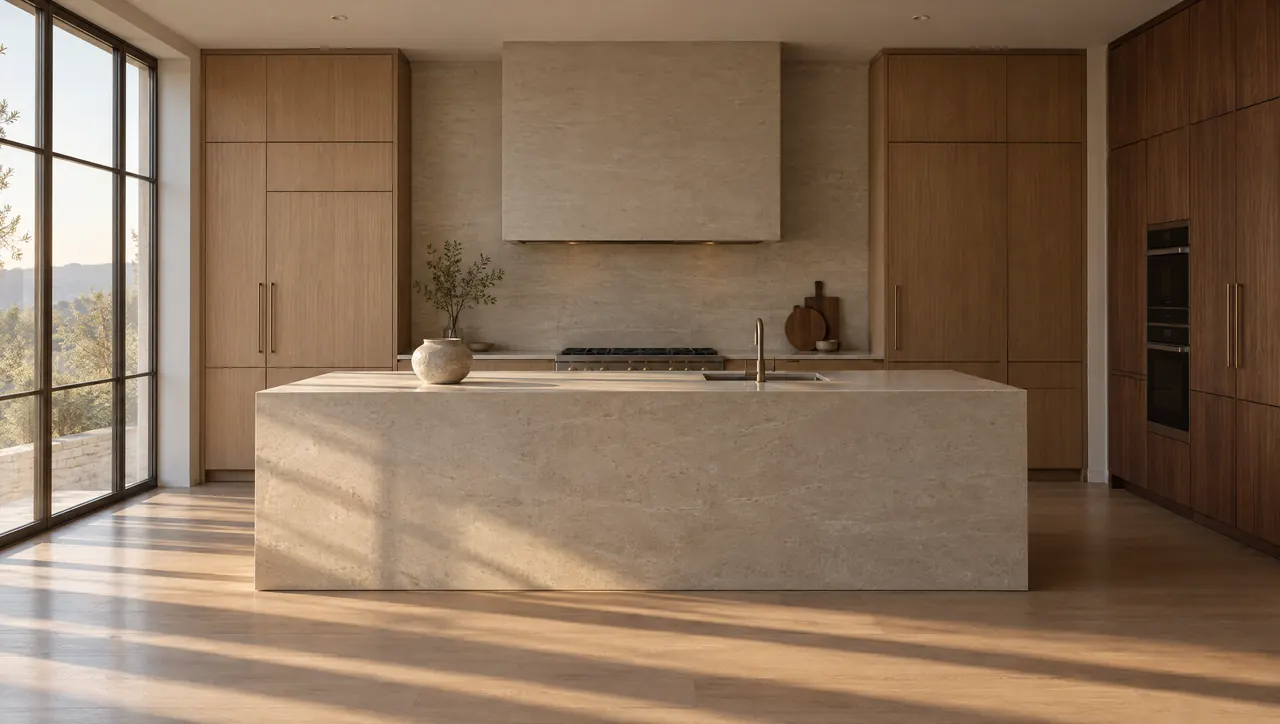
| Integrated insert | As good as the canopy built around it. A well-sized enclosure performs like a wall or island hood. | Same as the wall or ceiling position it occupies. | Hidden inside plaster, metal or cabinetry, so the hood reads as architecture. | Range walls that are a design focus, or kitchens where the hood should vanish. |
| Downdraft | Weakest. It pulls air sideways and down against the natural rise of heat, and struggles with tall pots and hard searing. | Down through the cabinet and floor below, at the cost of storage. | Nearly invisible when lowered. | Islands under glass or sloped ceilings where nothing can hang, and lighter cooking. |
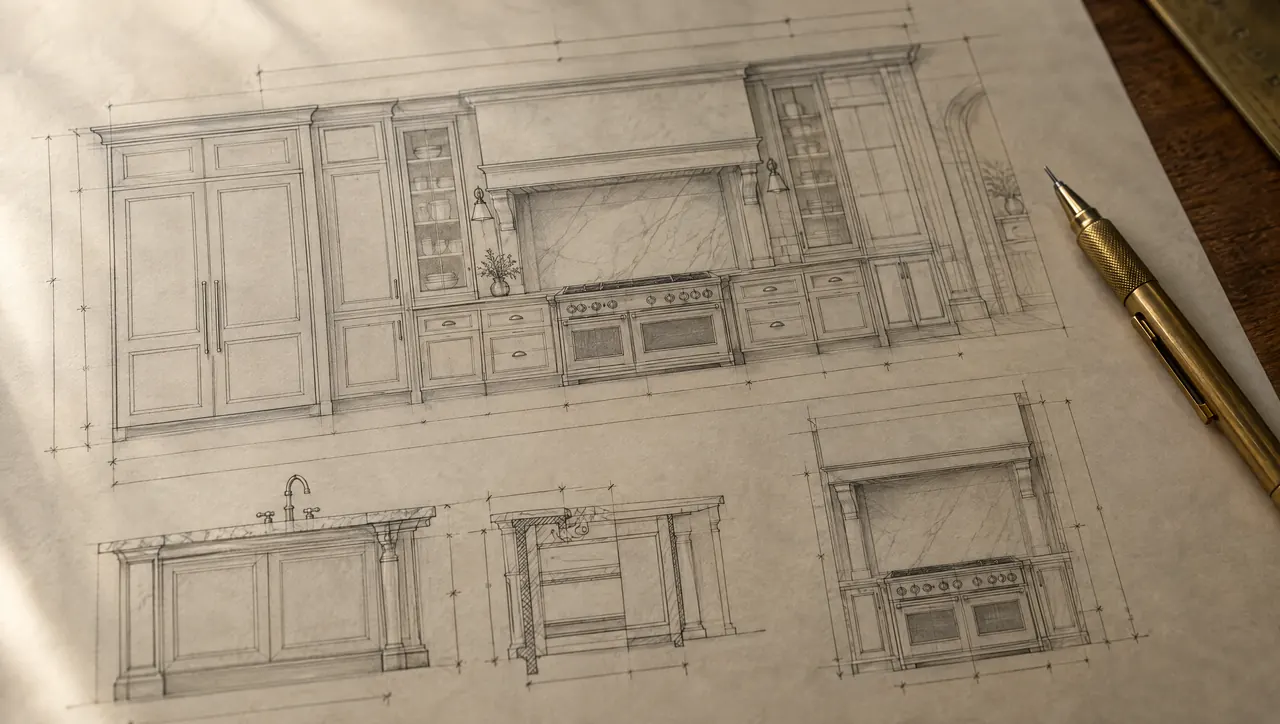
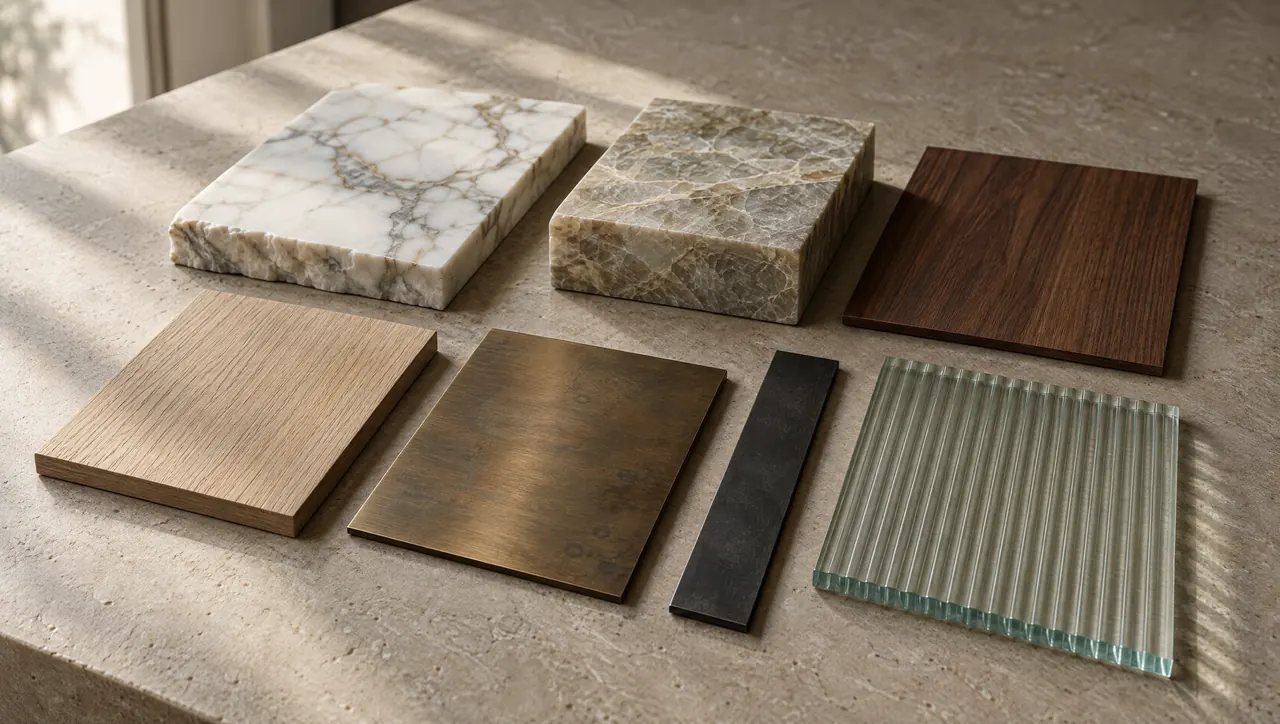
The insert is our default. It separates the mechanics from the form: the canopy can be sized for capture, then wrapped in plaster, stone, bronze or custom millwork that belongs to the room. Coordinating the insert, the blower, the duct and the controls is part of our appliance integration work, so the hood performs as specified once the enclosure is closed.
Choosing a hood: a short decision guide
Ventilation is one of the first decisions to settle in kitchen design, because it fixes where the range can go. Start with how you cook and where the cooktop sits, then let the guide below narrow it.
If / then
- If the range can sit on a perimeter wall
- Choose a wall hood or an insert in a custom enclosure. It is the most effective position, and we recommend it whenever the plan allows.
- If you sear, wok-cook or roast at high heat often
- Put capture first: a deep, wide canopy ducted outside, with the blower sized to the cooktop's output following the manufacturer's guidance.
- If the cooktop has to be on an island
- Use a generous island canopy or a ceiling-hung insert, and confirm the duct route above before committing.
- If nothing can hang above the island
- Downdraft may be the only option. Accept its limits and keep high-heat cooking on a wall range if there is one.
- If the kitchen is open to living space
- Specify a remote or inline blower and a canopy large enough to capture on a lower, quieter setting.
Making it disappear, or making it the point
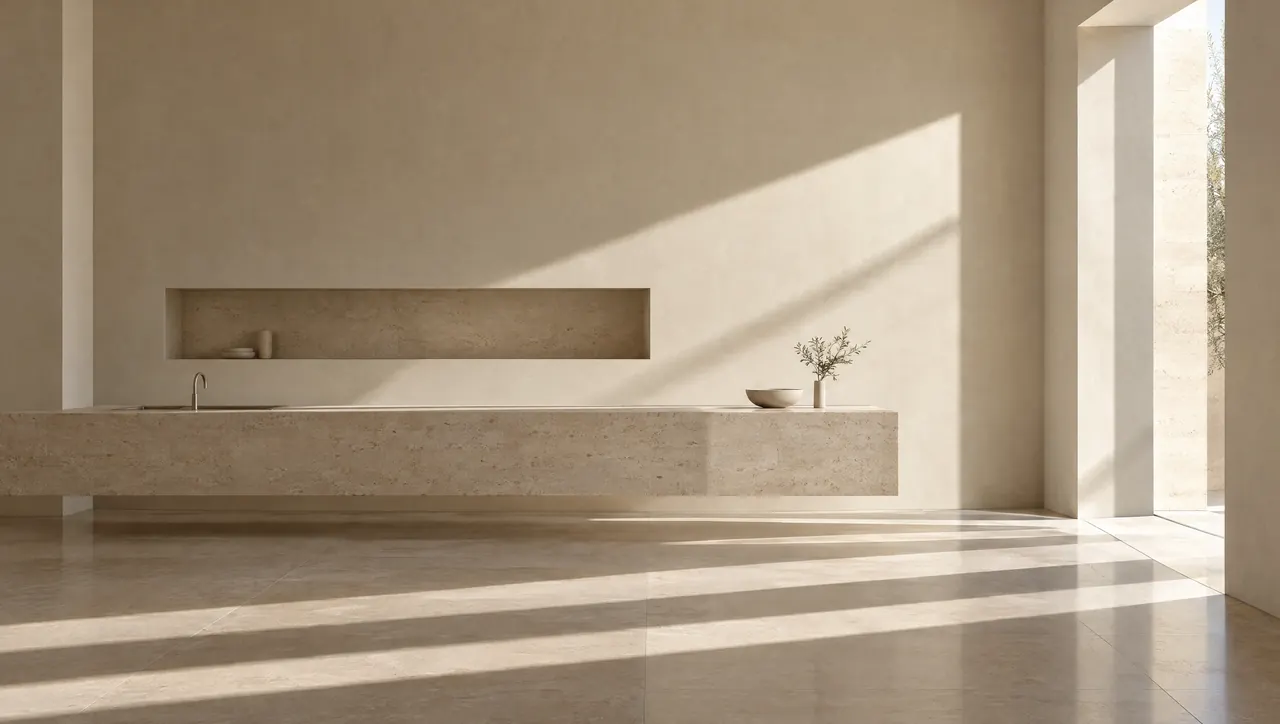
There are two honest directions. Either the hood merges with the plaster wall or the cabinetry run so the eye passes over it, or it becomes one crafted object, in bronze or stone, that anchors the range wall. Half-measures read poorly: a stock metal canopy over a carefully detailed wall looks like an appliance left in a finished room.
Whichever direction you take, design for use. Filters should come out without tools or a stepladder, the blower needs a service panel, and the controls belong where the cook can reach them with a hot pan in hand. The light built into many inserts is a weak point; we prefer to plan task light under the hood as part of the wider scheme in kitchen lighting design.
The bottom line
Design the hood from the inside out. Settle the duct route first, size the canopy to the cooktop, then build the enclosure around an insert. Put the range on a wall wherever the plan allows, and use downdraft only when nothing can hang above the cooktop.
If your kitchen is still on paper and the hood is an open question, we would be glad to look at the plan and how you cook. Start a conversation through our contact page or call 303-963-9688.